The war,then the four men inside it.

One book for the war itself, then four for the men who had to make decisions inside it. Take the overview first and the four lives stop being anecdotes.

5 books  ·  about 5 hours end to end  ·  £2.99 / $2.99 each  ·  free with Kindle Unlimited

World War II book coverFranklin D. Roosevelt book coverBenito Mussolini book coverDouglas MacArthur book coverWinston Churchill book cover

This collection is built differently from the others in the series, because one of its five books is an event and the other four are people. That is deliberate. Read the war first and you get the frame: the scale, the fronts, the chronology, the industrial arithmetic and the civilian dead. Then the four lives sit inside that frame rather than floating free. Roosevelt is the production and the alliance, Mussolini is the Axis seen from the inside, MacArthur is the Pacific, and Churchill is the year Britain spent alone with nothing much beyond a refusal to negotiate.

After the overview the order runs by when each life ends, which is close enough to useful. Roosevelt second, because American factories decide the outcome long before American infantry do. Mussolini third, since he died sixteen days after Roosevelt and because the Axis is easier to understand from its weakest founder than from its strongest one. MacArthur fourth, because the Pacific war has almost nothing in common with the European one and needs its own guide. Churchill last, because reading him after the full sweep makes 1940 look less like destiny and more like the narrow thing it was. Every book stands alone.

Five books, an hour each, about five hours for the largest war in history. The overview does not soften the Holocaust, the bombing of cities or the atomic weapons, and none of the four men is presented as a hero, or as a monster, without the record attached. For depth on any single campaign, this is the wrong length of book.

The reading path

5 books, in the order that makes each one hit harder than it would alone.

01

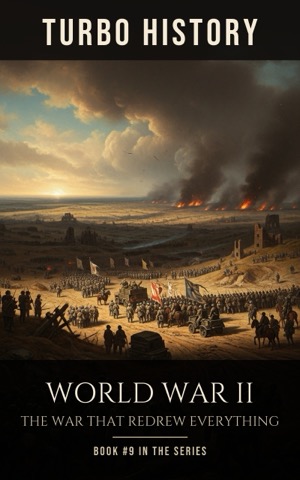
World War II: The War That Redrew Everything book cover

World War II - The War That Redrew Everything

Start here because the four lives that follow are unreadable without the shape of the war around them. Six years, somewhere between seventy and eighty-five million dead, the majority of them civilians, and roughly six million murdered in the Holocaust. This book does the whole thing at altitude: how it began, why the Eastern Front dwarfs everything else, and what the two atomic weapons in August 1945 settled and started.

Read the book
02

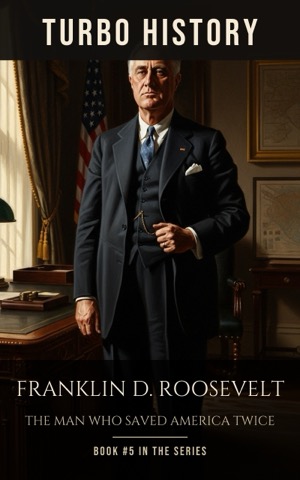
Franklin D. Roosevelt book cover

Franklin D. Roosevelt

Second, because the war is decided in factories some time before it is decided in the field, and that is his doing. Paralysed from the waist down since 1921 and rarely photographed in the chair, he won four presidential elections, pushed Lend-Lease through a neutral country in 1941, and held an alliance together with Stalin and Churchill in it. He died on 12 April 1945, less than a month before Germany surrendered.

Read the book

03

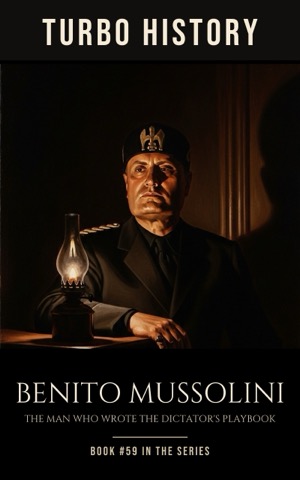
Benito Mussolini: The Man Who Wrote the Dictator's Playbook book cover

Benito Mussolini - The Man Who Wrote the Dictator's Playbook

Third, because the Axis needs a face on it, and his is the one that shows how thin the thing actually was. He built fascism as a system of government and Hitler copied it, then spent the war as the junior partner in his own idea: an invasion of Greece in 1940 that Germany had to come and finish, an army lost in North Africa, and his own Grand Council voting him out in July 1943. German commandos took him off a mountain and installed him over a puppet republic in the north. Partisans caught him near Lake Como in April 1945, three days before Hitler shot himself in Berlin.

Read the book

04

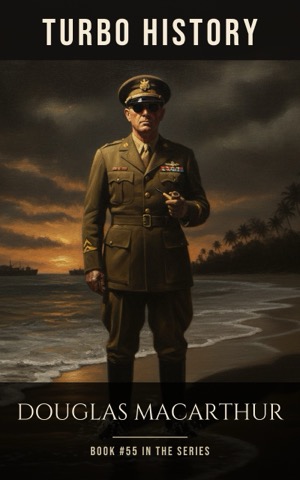
Douglas MacArthur: The General Who Returned book cover

Douglas MacArthur - The General Who Returned

Fourth, because the Pacific is effectively a separate war and he is the way into it. Ordered out of the Philippines in 1942 leaving his men to captivity, he came back at Leyte in October 1944 and took the Japanese surrender aboard the Missouri in September 1945. He then governed occupied Japan for six years and wrote much of its constitution, before being sacked in 1951 for arguing publicly with his own president.

Read the book

05

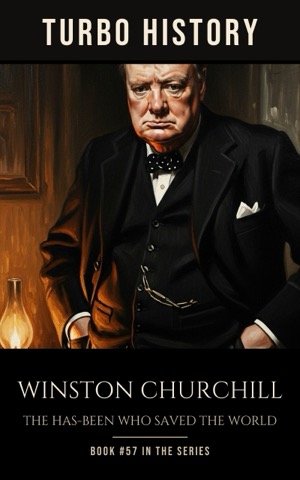
Winston Churchill: The Has-Been Who Saved the World book cover

Winston Churchill - The Has-Been Who Saved the World

Finish here, because after the full sweep of the war his one indispensable year looks far more precarious than the legend allows. Written off through the 1930s and carrying Gallipoli and a gold standard disaster behind him, he became prime minister in May 1940 as France fell. The book keeps in what the statue leaves out, including the Bengal famine, and the fact that the country voted him out weeks after victory in Europe.

Read the book
End of the path

The path ends with two of the four dead before the war was, and two who outlived their moment by twenty years. The Wars and Events collection puts this war back in sequence with the two that produced it, which is the shortest way to see why it happened at all.

Fair warning

These are not academic books. You will not find footnotes to chase, family trees to memorise, or ten pages on the logistics of a treaty. Every book ends with a page of proper ones to go to next if you want that depth. If you want the story and the big picture in an hour, you are home.

Second World War books go free most weekends.

Most weekends one Turbo History book goes completely free on Amazon, and often it is one of these. Leave your email and we will tell you which one, before it goes back to full price.

If you liked The Second World War

Same series, same hour, next to the ones you have just read.