If you want one scholarly life, read Paul Ratchnevsky's Genghis Khan: His Life and Legacy, which is still the standard forty years on. If you want a long readable narrative, Frank McLynn's Genghis Khan is the safer popular choice. Jack Weatherford's Genghis Khan and the Making of the Modern World is the book most people have actually read, and it is the one to handle with care. The Secret History of the Mongols, in Urgunge Onon's translation, is the only surviving account written by Mongols themselves. And if you have under an hour rather than a fortnight, ours covers the whole life in one sitting.
Every book listed here is real, in print or easily found, and worth the time. Reading times are honest estimates from page count at roughly 250 words per minute. One warning about the most popular title on this page. Jack Weatherford's book is enjoyable and it did more than anything else to shift the popular picture of the Mongols, but Mongol specialists consider it romanticised. Timothy May's review found numerous factual mistakes, and later assessments have pulled apart its claims about Mongol religious tolerance and about the invasions ending European knighthood. We have kept it on the list because it is worth reading, and put Ratchnevsky and May beside it so you can see the difference between a case being argued and evidence being weighed.
The short version
Sorted by what you want, not by what is most famous.
| Book | Length | Best for |
|---|---|---|
| Genghis Khan: His Life and Legacy Paul Ratchnevsky, translated by Thomas Nivison Haining, 1991 | ~313 pages About 9 hours | The definitive scholarly life. Chinese, Persian and Mongolian sources compared line by line |
| Genghis Khan: His Conquests, His Empire, His Legacy Frank McLynn, 2015 | ~648 pages About 18 hours | The readable full-length biography. Popular narrative that still respects the sources |
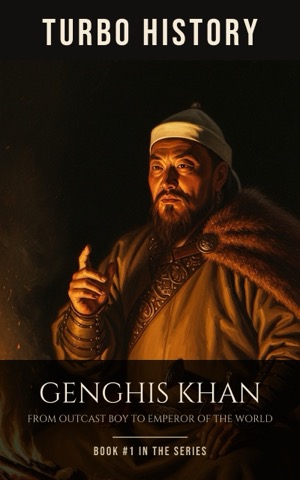
| Genghis Khan: From Outcast Boy to Emperor of the World Turbo History · ours | ~8,000 words Under an hour | The whole life in one sitting. How an abandoned boy built the largest contiguous land empire in history |
| Genghis Khan and the Making of the Modern World Jack Weatherford, 2004 | ~312 pages About 9 hours | The book everyone has read. The case for the Mongols as builders, argued hard |
| The Mongol Conquests in World History Timothy May, 2012 | ~319 pages About 9 hours | The rigorous counterweight. What the conquests actually changed, across the whole empire |
| The Secret History of the Mongols: The Life and Times of Chinggis Khan translated and annotated by Urgunge Onon, 2001 | ~298 pages About 8 hours | The Mongols in their own voice. The only surviving Mongolian account, written within living memory |
| The Mongols David Morgan, 1986 | ~246 pages About 7 hours | The short reliable overview. What the sources are, and how much of the standard story is propaganda |
| Chinggis Khan Michal Biran, 2007 | ~192 pages About 5 hours | The specialist angle in one short book. Genghis and the Islamic world, destruction and afterlife |
The picks, in detail
01
Genghis Khan: His Life and Legacy
Ratchnevsky worked directly from the surviving sources in three languages and is scrupulous about separating what they support from what later writers assumed, which is why this is still the academic standard. If you want to know what is actually known about Genghis rather than what makes a good story, start here. The cost is that it is source-critical rather than narrative, a large part of it is apparatus, and it reads like a scholar arguing with other scholars.
02
Genghis Khan: His Conquests, His Empire, His Legacy
McLynn pulls together decades of European-language scholarship into one continuous story and is markedly more careful with evidence than Weatherford while still writing for a general reader. If you want one long book on Genghis and no other, this is the sane choice. The cost is bulk, since at around 650 pages the detail piles up in the campaign chapters, and McLynn himself concedes at the outset that a definitive biography of Genghis is not possible.
03
Genghis Khan: From Outcast Boy to Emperor of the World ours
Every book on this list goes deeper than ours, and most of them are hard work. That is not a criticism, it is the entire point of them. McLynn runs to about 648 pages. Ratchnevsky is around 313 and most of them are argument about sources. They are good books, and they want weeks of your life.
If you are researching the Mongols properly, or studying them, or sitting an exam on them, buy one of those and give it the time it deserves. We are not pretending to compete with them.
If you are not, ours might suit you better. It starts with a poisoned father, a family abandoned on the steppe by its own clan, a boy who ate roots and rodents to survive, a half-brother ambushed on a hillside, and a period spent as a captive. Then the sable cloak carried to Toghrul, the first sworn companions, the Merkit raid that took Borte, the blood brother Jamukha and what happened to that friendship, the defeat at Dalan Baljut and the muddy water at Baljuna. After that the part people skip: the decimal system that broke tribal identity for good, the keshig that was bodyguard, hostage pool and civil service at once, the shaman Kokechu who had to go, and the Jin campaign. There is a chapter on what else was happening in the world at the time, and a chapter on why it still matters that does not sugarcoat the body count, the ruined irrigation of Khorasan, or the fact that he is a founding father in Mongolia and the ultimate villain in Iran, Iraq and Russia.
That is what the whole series is for. Love history, but hate how it was taught at school? Same. School turned it into a memory test: names, dates, family trees, exam. The actual story never stood a chance. Turbo History is one figure or one event per book, told in under an hour. The rise, the fall, and why it still matters. Dates included, memorising optional. Sources at the back if you want to go further, and every book on this page is a good place to go next.
04
Genghis Khan and the Making of the Modern World
Weatherford is an anthropologist rather than a Mongol historian, and this is advocacy: the Mongols as connectors of trade, law and ideas rather than simple destroyers. It is gripping, it changed the popular picture, and there is a real argument underneath it. But specialists have been blunt about the mistakes, the sourcing is difficult to trace because of how the notes are handled, and claims about religious tolerance and about the effect on Europe are overstated. Read it, then read Ratchnevsky.
05
The Mongol Conquests in World History
May is the Mongol specialist who reviewed Weatherford, and this is the version of the same big argument done with the evidence attached: trade, disease, migration, religion and technology traced across Eurasia rather than asserted. It covers the entire empire instead of one region, which is rarer than it sounds. The cost is that it is thematic rather than dramatic, and Genghis himself is only part of a much longer story, so it is not a biography.
06
The Secret History of the Mongols: The Life and Times of Chinggis Khan
This is the primary source everything else is built on: the origin myths, the killing of the half-brother, the abduction of Borte, the betrayals, told from inside the family rather than by the people they conquered. Onon's translation is readable and heavily annotated, with a long introduction that tells you how to use it. It is not history in the modern sense, being epic, partisan and slippery about dates, and the verse passages and clan genealogies are hard going without a guide beside you.
07
The Mongols
Morgan gives you the whole Mongol story in under 250 pages and is unusually good on where the evidence comes from, which matters here more than for almost any other subject. The second edition is the one to get. It is written for students, so there is no narrative colour and very little on the battles themselves, and the revised edition largely updates the reading list rather than rewriting the original text.
08
Chinggis Khan
Biran is a leading Central Asia scholar and this covers both halves of the story honestly: the Khwarazmian campaign that gutted the cities of Iran and Central Asia, and the long career of Genghis as a source of political legitimacy in Muslim writing afterwards. It is short, sharply written and properly sourced. The narrowness is the point and also the limit, since it assumes you know the basic biography and the Chinese and Russian parts of the story are largely absent.
Questions people actually ask
What is the best book about Genghis Khan?
Paul Ratchnevsky's Genghis Khan: His Life and Legacy, in Thomas Nivison Haining's translation, is still the scholarly standard and the book other historians cite. It is about 313 pages and it is dry. If you want one long readable biography instead, Frank McLynn's Genghis Khan (2015) is the better popular choice, and it is more careful with the evidence than the bestseller most people reach for.
Is Jack Weatherford's Genghis Khan book accurate?
Partly. Genghis Khan and the Making of the Modern World is well written and it usefully corrected the idea that the Mongols were only destroyers. But Weatherford is an anthropologist, not a Mongol historian, and specialists have identified numerous factual errors, difficult-to-trace sourcing, and overstated claims about Mongol religious tolerance and about the invasions ending knighthood in Europe. Read it for the argument, then check it against Ratchnevsky or Timothy May.
Where should I start with Genghis Khan?
Start with David Morgan's The Mongols, which is under 250 pages and tells you both the story and where the evidence for it comes from. Then read Ratchnevsky if you want the life in detail, or Timothy May's The Mongol Conquests in World History if you want to know what the conquests actually changed across Eurasia.
Should I read The Secret History of the Mongols?
Yes, but not first. It is the only surviving account written by Mongols, produced within decades of Genghis's death, and it is the source almost every modern book leans on. Urgunge Onon's annotated translation runs to roughly 298 pages and is the most approachable way in. It is epic rather than history, partisan and vague about chronology, so read a modern narrative first and use the Secret History as the raw material behind it.
What is the best short book about Genghis Khan?
Michal Biran's Chinggis Khan, at around 192 pages, is the shortest serious book here, though it is focused on Genghis and the Islamic world rather than on the whole life. David Morgan's The Mongols is about 246 pages and covers more ground. Our own hour-long version covers the whole life if you want the shape of it tonight.
This book is free sometimes. Want to know when?
Genghis Khan goes free on Amazon from time to time, along with the rest of the series. Leave your email and we will tell you the moment it does.
More from the series
One figure or one event per book. Under an hour each.