If you want one modern history, read Helen Castor's Joan of Arc: A History, which puts her inside the French civil war instead of the legend. If you want Joan in her own words, read Daniel Hobbins's translation of The Trial of Joan of Arc, because the record of her interrogation survives and she is extraordinary in it. If you want the campaigns rather than the visions, read Kelly DeVries's Joan of Arc: A Military Leader. Marina Warner's Joan of Arc: The Image of Female Heroism is the best book on what everyone since has made of her. And if you have under an hour rather than a fortnight, ours covers the whole life in one sitting.
Every book listed here is real, in print or easily found, and worth the time. Reading times are honest estimates from page count at roughly 250 words per minute. Joan is an unusual case. Almost no peasant of the 1400s left any trace at all, but the record of her condemnation trial in 1431 survives, and so do the rehabilitation proceedings of 1456 with their scores of witnesses, which makes her one of the best documented people of her century. That is why a translation of the trial record sits on this list alongside the biographies: you can read her own answers to the men who burned her.
The short version
Sorted by what you want, not by what is most famous.
| Book | Length | Best for |
|---|---|---|
| Joan of Arc: A History Helen Castor, 2014 | ~328 pages About 9 hours | The best modern narrative. Joan placed inside the war that produced her |
| The Trial of Joan of Arc Daniel Hobbins (translator), 2005 | ~272 pages About 8 hours | The primary source. Her actual answers to the court that condemned her |
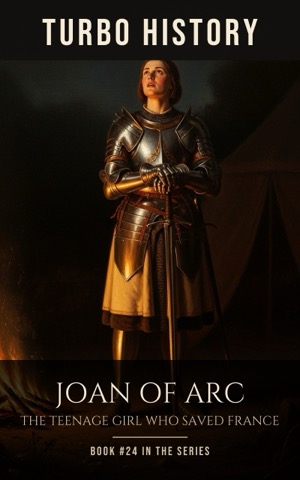
| Joan of Arc: The Teenage Girl Who Saved France Turbo History · ours | ~6,700 words Under an hour | The whole life in one sitting. A farmer's daughter, nine days at Orléans, and the fire |
| Joan of Arc: La Pucelle Craig Taylor (editor and translator), 2006 | ~370 pages About 11 hours | The documentary record in one volume. Chronicles, letters, both trials and the afterlife |
| Joan of Arc: Her Story Régine Pernoud and Marie-Véronique Clin, 1998 | ~304 pages About 9 hours | The document-led biography. Testimony quoted rather than paraphrased |
| The Virgin Warrior: The Life and Death of Joan of Arc Larissa Juliet Taylor, 2009 | ~241 pages About 7 hours | The sceptical life. Joan as someone who built her own reputation |
| Joan of Arc: A Military Leader Kelly DeVries, 1999 | ~242 pages About 7 hours | The campaigns, seriously. Orléans, the Loire and Paris as military operations |
| Joan of Arc: The Image of Female Heroism Marina Warner, 1981 | ~349 pages About 10 hours | The afterlife rather than the life. Why every side has wanted to claim her |
| Joan of Arc: A Life Mary Gordon, 2000 | ~180 pages About 5 hours | The short one. A novelist's compressed life for the Penguin Lives series |
The picks, in detail
01
Joan of Arc: A History
Castor spends the first stretch of the book on the Armagnac and Burgundian civil war before Joan appears at all, which sounds like a delay and turns out to be the whole point: without it you cannot understand why anyone at Chinon listened to her. The writing is clean and the pace holds. If you want a straight cradle to stake biography from page one, that structure will frustrate you.
02
The Trial of Joan of Arc
This is the first full English translation of the 1431 condemnation record in about fifty years, made from the Latin, with an introduction and the assessments written after her death. Watching an illiterate teenager outmanoeuvre trained theologians in her own recorded words is a different experience from reading someone describe it. It is a trial transcript, so it repeats itself and it is procedural, and it does not include the 1456 rehabilitation.
03
Joan of Arc: The Teenage Girl Who Saved France ours
Every book on this list goes deeper than ours, and most of them are hard work. That is not a criticism, it is the entire point of them. Craig Taylor gives you 370 pages of translated documents and expects you to do the interpreting. Marina Warner gives you 349 pages on what six centuries have made of her. They are good books, and they want weeks of your life.
If you are studying the Hundred Years' War, or sitting an exam on it, buy one of those and give it the time it deserves. We are not pretending to compete with them.
If you are not, ours might suit you better. It starts in Domrémy with a farmer's daughter in a valley the war kept reaching, a France split between Armagnacs and Burgundians, a king who went mad and an heir who had been disinherited, and prophecies already circulating about a virgin who would save the country. Then the voices, the garrison commander who turned her away twice, Chinon, and the nine days at Orléans that broke the momentum of the war. Then Reims and the coronation, the failure at Paris, Compiègne, being sold to the English, the trial, the relapse, and 30 May 1431. It ends on what she left behind: the surviving trial record and the scores of witnesses examined in the 1456 rehabilitation, why every French political movement since has tried to claim her, what the cross-dressing charge was really about, and the parts that do not flatter her, including Jargeau and the execution of Franquet d'Arras.
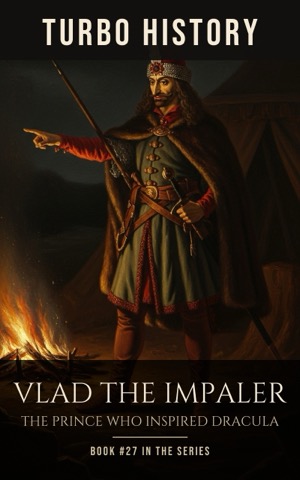
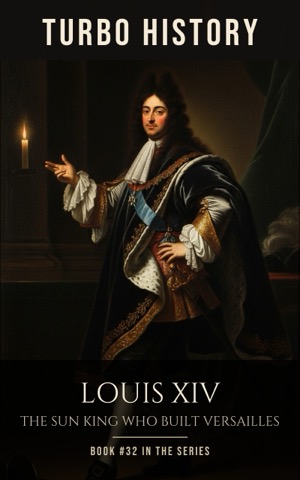
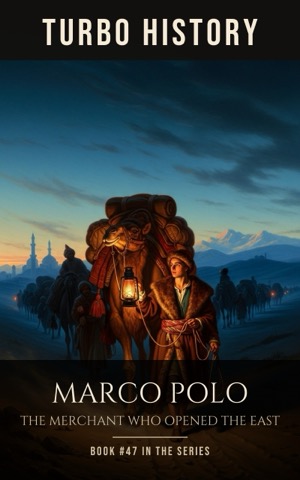
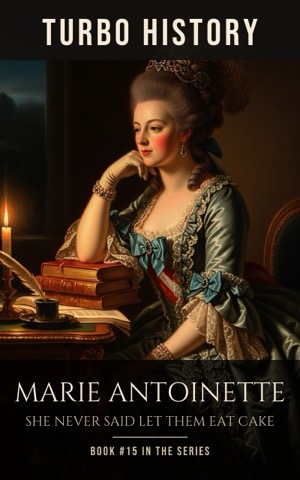
That is what the whole series is for. Love history, but hate how it was taught at school? Same. School turned it into a memory test: names, dates, family trees, exam. The actual story never stood a chance. Turbo History is one figure or one event per book, told in under an hour. The rise, the fall, and why it still matters. Dates included, memorising optional. Sources at the back if you want to go further, and every book on this page is a good place to go next.
04
Joan of Arc: La Pucelle
Taylor translates and arranges around a hundred documents: the life from the Treaty of Troyes onward, the condemnation trial, the contemporary argument about her including Christine de Pizan, the nullification trial of 1456, and how she was remembered right down to her canonisation. It is the single best place to see the evidence historians are actually working from. It is a university sourcebook, excerpted rather than continuous, and it is pitched at students.
05
Joan of Arc: Her Story
Pernoud spent her career in the French archives, and this English version, revised and translated by Jeremy duQuesnay Adams, builds the life out of trial and eyewitness testimony, with a useful who's who of everyone around her. It is the most efficient way to get the evidence and the narrative in the same book. The document-first method means it reads as assembled rather than told, and the French original dates from 1986.
06
The Virgin Warrior: The Life and Death of Joan of Arc
Taylor is more interested in how Joan handled people, prophecy and publicity than in whether the voices were real, and the result is a tightly sourced portrait of an ambitious teenager who understood her own image. It is short and it does not sentimentalise her. Readers who want the religious experience taken at face value will find it cold.
07
Joan of Arc: A Military Leader
DeVries is a military historian and this is the only full treatment of Joan as a commander: what she actually did at Orléans, how the Loire campaign was fought, why the assault on Paris failed. It sidesteps the argument about visions by looking at results. It is narrow by design and it assumes you can follow siege warfare and troop movements without much hand holding.
08
Joan of Arc: The Image of Female Heroism
Warner traces what Joan has been made to stand for over five centuries: virgin, soldier, saint, nationalist icon, and how the men's clothing and the virginity became the centre of the argument. It is the standard book on her reception and it changes how you read all the others. It is a study of symbols rather than a biography, so read a life first.
09
Joan of Arc: A Life
Gordon gives you the shape of the story in about 180 pages, with some serious thinking about faith, gender and what belief of that intensity actually costs. It is one or two evenings and no more. She is a novelist rather than a medievalist, so use it as an introduction and go to Castor or the trial record for the scholarship.
Questions people actually ask
What is the best book about Joan of Arc?
Helen Castor's Joan of Arc: A History (2014) is the best modern one-volume account, at about 328 pages, and it is unusually good at showing why a France torn between Armagnacs and Burgundians was ready to believe her. For a shorter and more sceptical life, Larissa Juliet Taylor's The Virgin Warrior is about 241 pages. Neither replaces reading some of the trial record itself.
Can I read Joan of Arc's own words?
Yes, and this is what makes her unusual. The record of her 1431 condemnation trial survives, and Daniel Hobbins's translation, The Trial of Joan of Arc (2005), is the first full English version in about fifty years. Craig Taylor's Joan of Arc: La Pucelle goes wider, adding chronicles, letters and the 1456 rehabilitation proceedings. Reading her answers under interrogation is the single best thing you can do on this subject.
Why is Joan of Arc so well documented for a medieval person?
Because she was tried twice. The 1431 trial that condemned her was recorded in detail by a court that wanted the heresy conviction to look watertight, and the 1456 rehabilitation proceedings examined scores of witnesses who had known her, fought with her or judged her. Between them they preserve dates, direct quotations and specific accusations that almost no other peasant of the period left behind.
What is the best book on Joan of Arc as a military commander?
Kelly DeVries's Joan of Arc: A Military Leader (1999) is the only full study of the campaigns as campaigns: Orléans, the Loire, the march to Reims and the failed assault on Paris. It is about 242 pages and it treats her as a commander to be assessed rather than a mystic to be explained. It assumes you can follow siege warfare without much help.
What is the best short book about Joan of Arc?
Mary Gordon's Joan of Arc: A Life, written for the Penguin Lives series, is about 180 pages and is the quickest serious introduction, though she is a novelist rather than a historian. Larissa Juliet Taylor's The Virgin Warrior, at about 241 pages, is the short book with the stronger scholarship. Our own hour-long version covers the whole life if you want the shape of it tonight.
This book is free sometimes. Want to know when?
Joan of Arc goes free on Amazon from time to time, along with the rest of the series. Leave your email and we will tell you the moment it does.
More from the series
One figure or one event per book. Under an hour each.