If you want the serious scholarly life, read Matei Cazacu's Dracula, which uses sources in more than nine languages and is the most authoritative account in English. If you want one readable biography with the documents printed at the back, read Kurt Treptow's Vlad III Dracula. If you want to understand why almost everything you have heard is wrong, read Elizabeth Miller's Dracula: Sense and Nonsense, which takes apart the vampire connection line by line. And if you have under an hour rather than a fortnight, ours covers the whole reign in one sitting. Everything below is sorted by what you are actually trying to get out of it.
Every book listed here is real, in print or easily found second hand, and worth the time. Reading times are honest estimates from page count, not measurements. Two warnings specific to this subject. First, most popular writing about Vlad III is really writing about Dracula, and Dracula is a Victorian novel with almost no connection to the historical prince of Wallachia. Bram Stoker took a name and a region and invented the rest. We say on each entry below whether a book is serious history or vampire-adjacent. Second, the contemporary German pamphlets that supply most of the famous atrocity stories were hostile propaganda, printed by people Vlad had terrorised and sold to readers who enjoyed the horror. They are evidence of something, but they are not neutral reporting, and any book that repeats their body counts without saying so should be read carefully.
The short version
Sorted by what you want, not by what is most famous.
| Book | Length | Best for |
|---|---|---|
| Dracula Matei Cazacu, edited by Stephen W. Reinert, 2017 | ~457 pages About 13 hours | The scholarly standard. Serious history, built on sources in more than nine languages |
| Vlad III Dracula: The Life and Times of the Historical Dracula Kurt W. Treptow, 2000 | ~296 pages About 8 hours | The best one-volume life for a general reader. Serious history with the primary documents printed at the back |
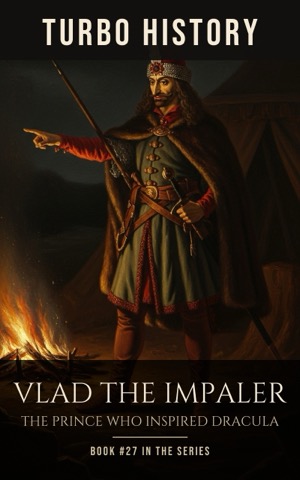
| Vlad the Impaler: The Prince Behind the Dracula Myth Turbo History · ours | ~6,500 words Under an hour | The whole reign in one sitting. Who he actually was, what he actually did, and why the vampire ate his history |
| Dracula, Prince of Many Faces: His Life and His Times Raymond T. McNally and Radu R. Florescu, 1989 | ~261 pages About 7 hours | The most readable narrative life. Two Boston College historians writing for a general audience |
| Vlad the Impaler: In Search of the Real Dracula M. J. Trow, 2003 | ~288 pages About 8 hours | The sources examined one by one. Good on how much of the horror is propaganda |
| Dracula: Sense and Nonsense Elizabeth Miller, 2006 | ~208 pages About 6 hours | The demolition job. What Stoker actually knew about Vlad, which was almost nothing |
| Dracula: Essays on the Life and Times of Vlad Tepes Kurt W. Treptow, editor, 1991 | ~336 pages About 10 hours | The specialist angle. Separate scholars on the sources, the propaganda and the Ottoman side |
| In Search of Dracula: The History of Dracula and Vampires Raymond T. McNally and Radu Florescu, 1994 | ~297 pages About 8 hours | The book that created the modern confusion. Worth reading to understand why everyone believes what they believe |
The picks, in detail
01
Dracula
Cazacu wrote this in French in 2004 and Reinert's English edition updated the bibliography and translated the quoted sources directly, which makes it the most reliable full account available in English. It covers the reign, then follows the propaganda: how the German pamphlets built the tyrant, how the Russian tales built the stern ruler, and how the vampire arrived centuries later. It is an academic book from an academic press, so it is expensive, densely referenced, and assumes you can hold fifteenth-century Balkan politics in your head.
02
Vlad III Dracula: The Life and Times of the Historical Dracula
Treptow works through the Romanian, Turkish, Russian and German sources and builds a straight chronological life out of them, which is harder than it sounds given how little survives. The appendices are the real value, because they give you translated documents and you can see for yourself how thin and how partisan the record is. It is drier than a trade biography and the Wallachian dynastic politics take real effort in the early chapters.
03
Vlad the Impaler: The Prince Behind the Dracula Myth ours
Every book on this list goes deeper than ours, and most of them are hard work. That is not a criticism, it is the entire point of them. Cazacu gives you 457 pages built on sources in nine languages. Trow gives you 288 pages of picking apart where each atrocity story came from. They are good books, and they want weeks of your life.
If you are studying this properly, or sitting an exam on late medieval Eastern Europe, buy one of those and give it the time it deserves. We are not pretending to compete with them.
If you are not, ours might suit you better. It starts with the father who joined the Order of the Dragon and gave the family its name, the years Vlad spent as an Ottoman hostage rather than a guest, and the murder of his father and brother that put him on the road back. Then the three reigns, the war with Mehmed II, and the disputed death near Snagov. There is a section on what got forged and exaggerated in the German pamphlets, a section on the Russian stories that treated his cruelty as good government, and a chapter on what else was happening in Europe, the Islamic world, China, India, Africa and the Americas while he ruled. It ends on the Dracula problem: why a Victorian novel replaced a real life, why he is a national hero in Romania and a Halloween costume everywhere else, and what the death toll actually looks like when you stop repeating the pamphlets.
That is what the whole series is for. Love history, but hate how it was taught at school? Same. School turned it into a memory test: names, dates, family trees, exam. The actual story never stood a chance. Turbo History is one figure or one event per book, told in under an hour. The rise, the fall, and why it still matters. Dates included, memorising optional. Sources at the back if you want to go further, and every book on this page is a good place to go next.
04
Dracula, Prince of Many Faces: His Life and His Times
This is the book most people mean when they say they have read a biography of Vlad, and it moves well: the hostage years with the Ottomans, the three reigns, the night attack on Mehmed's camp, the imprisonment in Hungary. It is serious history rather than vampire writing, and the footnotes are real. The cost is that both authors spent their careers arguing for a strong link between Vlad and Stoker's novel, and that argument leans on the story here more than the evidence supports.
05
Vlad the Impaler: In Search of the Real Dracula
Trow spends a lot of the book on where the stories came from rather than just retelling them, which is exactly the right instinct for this subject. He works through the Saxon pamphlets, the Russian narratives, the Romanian folk tales and the court documents, and asks what each was for. He is a popular historian rather than a specialist and some of the speculation runs ahead of the evidence, so read it after Treptow rather than instead of him.
06
Dracula: Sense and Nonsense
Miller was the leading Stoker scholar and this book collects the claims people repeat about Dracula and checks each one against Stoker's own working notes. Her central finding is the one that matters here: Stoker borrowed a name from a reference book and knew essentially nothing about the historical prince. It is a book about the novel rather than about Wallachia, so it will not teach you fifteenth-century history, but it will stop you believing four or five things you probably believe now.
07
Dracula: Essays on the Life and Times of Vlad Tepes
This is an academic collection rather than a narrative, with chapters on the German pamphlet tradition, the Russian tales, Ottoman campaigns and Romanian historiography. It is where you go when you want to know how historians actually argue about Vlad rather than what the settled story is. Being a collection, the quality varies chapter by chapter and it assumes you already know the outline of the reign.
08
In Search of Dracula: The History of Dracula and Vampires
First published in 1972 and revised in 1994, this is the book that welded Vlad the Impaler to Bram Stoker's vampire in the public mind, and half the documentaries you have seen descend from it. It is genuinely readable and the Romanian material is solid. But its central claim, that Stoker built his Count on the historical prince, has been picked apart by later scholars including Elizabeth Miller, so treat it as a landmark in the myth rather than a guide to the man.
Questions people actually ask
What is the best book about Vlad the Impaler?
Matei Cazacu's Dracula, in the English edition edited by Stephen Reinert, is the most authoritative account available. It runs to roughly 457 pages and draws on sources in more than nine languages, which matters because the evidence for Vlad is scattered across Romanian, Ottoman, Hungarian, German and Slavonic material. If that is too much book, Kurt Treptow's Vlad III Dracula covers the same ground in about 296 pages and prints translations of the key documents.
Where should I start with Vlad the Impaler?
Start with McNally and Florescu's Dracula, Prince of Many Faces. It is the most readable full-length life, it is written by two working historians, and at roughly 261 pages you will actually finish it. Move to Treptow or Cazacu afterwards if you want the sources laid out, and read Elizabeth Miller alongside any of them to keep the novel and the man apart.
Was Vlad the Impaler really Dracula?
No, not in the sense people mean. Bram Stoker's 1897 novel is Victorian Gothic fiction and Stoker's own working notes show he took little more than a name he found in a reference book on Wallachia. Elizabeth Miller's Dracula: Sense and Nonsense sets out the evidence for that in detail. The claim that Stoker modelled his Count on the historical prince comes mainly from McNally and Florescu's In Search of Dracula, published in 1972, and later scholars have not accepted it.
Are the stories about Vlad impaling thousands of people true?
Some of it is documented and some of it is propaganda, and the honest answer is that we often cannot tell which is which. The most lurid stories come from German pamphlets built on accounts supplied by the Transylvanian Saxons Vlad had attacked, printed in Nuremberg and Strasbourg from 1488, after his death, and sold to readers who enjoyed atrocity stories. They were among the first mass-market bestsellers in print. The famous body counts came from churchmen: 40,000 from the papal legate Nicholas of Modrus, 100,000 from Gabriele Rangoni, bishop of Eger. Modern reassessment has cut them down hard, with a 2025 study putting the plausible total nearer 1,600 across his whole career, and nobody serious defends the old numbers. Cazacu and Treptow are the two books that handle this carefully.
What is the best short book about Vlad the Impaler?
Elizabeth Miller's Dracula: Sense and Nonsense is about 208 pages and is the shortest genuinely useful book on this page, though it is about the novel rather than the reign. For a short life, McNally and Florescu at roughly 261 pages is the least demanding of the proper biographies. Our own hour-long version covers the reign, the propaganda and the Dracula confusion if you want the shape of it tonight.
This book is free sometimes. Want to know when?
Vlad the Impaler goes free on Amazon from time to time, along with the rest of the series. Leave your email and we will tell you the moment it does.
More from the series
One figure or one event per book. Under an hour each.