If you only ever read one book on the war, read James McPherson's Battle Cry of Freedom, which holds the politics and the battles in one narrative and won the Pulitzer. If you want the shape of it in an afternoon, Louis Masur's The Civil War: A Concise History does it in about 136 pages. If you want it from the inside, go to the Personal Memoirs of U. S. Grant or Mary Chesnut's diary. And if you have under an hour rather than a fortnight, ours covers the whole war in one sitting. Everything below is sorted by what you are actually trying to get out of it.
Every book listed here is real, checked against publisher pages, prize records or library catalogues, and worth the time. Reading times are honest estimates from page count at roughly 250 words per minute. One caveat we will not bury: Shelby Foote's trilogy is on this list because the writing is extraordinary, but it is almost entirely military, it says very little about slavery, emancipation or Black soldiers, and its sympathies lean Confederate. We would rather tell you that up front than let you find out 2,000 pages in.
The short version
Sorted by what you want, not by what is most famous.
| Book | Length | Best for |
|---|---|---|
| Battle Cry of Freedom: The Civil War Era James M. McPherson, 1988 | ~904 pages About 23 hours | The whole war at full depth. Politics, slavery, economics and every campaign in one authoritative narrative |
| The Civil War: A Narrative Shelby Foote, 1958 | ~2,970 pages across 3 volumes, published 1958 to 1974 About 75 hours | The immersive epic. Twenty years in the writing, the war as a novelist tells it |
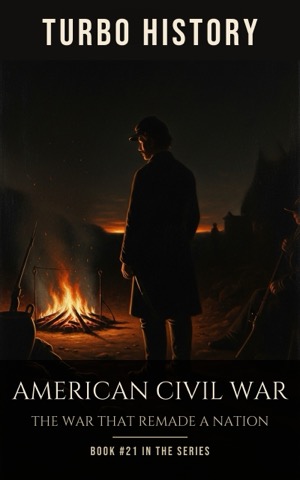
| American Civil War: The War That Remade a Nation Turbo History · ours | ~6,800 words Under an hour | The whole war in one sitting. How it started, how it was won, and what it did and did not settle |
| A Stillness at Appomattox Bruce Catton, 1953 | ~440 pages About 11 hours | The classic, and the best single volume on the war's last year. The Army of the Potomac from the Wilderness to surrender |
| Personal Memoirs of U. S. Grant Ulysses S. Grant, 1885 | ~1,230 pages across 2 volumes About 20 hours | The great first-hand account. The winning general explaining his own war, written as he was dying |
| Mary Chesnut's Civil War Mary Chesnut, edited by C. Vann Woodward, 1981 | ~890 pages About 20 hours | The war from inside the Confederate elite. A sharp, gossipy, self-aware diary of a society collapsing |
| This Republic of Suffering: Death and the American Civil War Drew Gilpin Faust, 2008 | ~346 pages About 9 hours | The specialist angle that changes the whole picture. What mass death did to a country with no way to cope with it |
| The Civil War: A Concise History Louis P. Masur, 2011 | ~136 pages About 3 hours | The genuinely short one. The whole war, year by year, in an afternoon |
| Landscape Turned Red: The Battle of Antietam Stephen W. Sears, 1983 | ~430 pages About 11 hours | One battle done properly. The bloodiest day in American history, hour by hour |
The picks, in detail
01
Battle Cry of Freedom: The Civil War Era
This is the standard one-volume history and has been since it appeared, because McPherson holds the battles and the politics in the same story instead of choosing one. It won the Pulitzer and it reads far better than a book this size has any right to. It is still 900 dense pages, and the first two hundred are pre-war politics, which some readers find slow going.
02
The Civil War: A Narrative
Foote was a novelist and it shows: the prose, the pacing and the sense of being present at the battles are unmatched, and readers who finish it rarely forget it. It is also a military narrative with very little on slavery, emancipation or Black soldiers, and its sympathies lean Confederate, which is the standard and fair criticism. Go in knowing that, and read McPherson alongside it.
03
American Civil War: The War That Remade a Nation ours
Every book on this list goes deeper than ours, and most of them are hard work. That is not a criticism, it is the entire point of them. McPherson gives you 904 pages and around twenty-three hours. Foote gives you 2,970 pages across three volumes. They are good books, and they want weeks of your life.
If you are studying the war properly, or sitting an exam on it, buy one of those and give it the time it deserves. We are not pretending to compete with them.
If you are not, ours might suit you better. It starts with the fault line, Lincoln's election in November 1860 by a man who was not even an abolitionist, the two presidents, the cast, the border states and then Fort Sumter, where 85 men were running out of food. The war itself runs in four parts: outbreak, escalation, turning point, resolution. There is a chapter on what the rest of the world was doing between 1861 and 1865, from Europe and the Ottoman Empire to Asia, Latin America, Africa, Australia and New Zealand. And it ends on what actually changed: the Thirteenth, Fourteenth and Fifteenth Amendments, the collapse of the Southern economy, the twelve years of Reconstruction and how they were rolled back after 1877, the Lost Cause myth and why it stuck, and roughly 698,000 dead, about 2 percent of the population.
That is what the whole series is for. Love history, but hate how it was taught at school? Same. School turned it into a memory test: names, dates, family trees, exam. The actual story never stood a chance. Turbo History is one figure or one event per book, told in under an hour. The rise, the fall, and why it still matters. Dates included, memorising optional. Sources at the back if you want to go further, and every book on this page is a good place to go next.
04
A Stillness at Appomattox
Catton won the Pulitzer and the National Book Award for this, and seventy years on it is still the model for writing about soldiers rather than about generals. The grinding, exhausted feel of 1864 comes through better here than anywhere. It is the third book of a trilogy, so you lose some context starting here, and the scholarship is old.
05
Personal Memoirs of U. S. Grant
Grant wrote this in his last year, racing cancer to leave his family an income, and the plainness of the prose is exactly why it lasts. It is the best account of how the war looked to the man running it, and it is genuinely clear on why he did what he did. It is also self-serving in places, stops at the end of the war, and skips most of what happened away from his own commands.
06
Mary Chesnut's Civil War
Chesnut was close to the Confederate leadership and wrote about them with a novelist's eye, including uncomfortably frank passages about slavery and about the men around her. Woodward's edition won the Pulitzer and sorts out what she wrote during the war from what she revised later, which matters. It is long, it wanders, and you are seeing everything through one privileged and partisan pair of eyes.
07
This Republic of Suffering: Death and the American Civil War
Faust looks at burial, notification, grief and the invention of the national cemetery system, and it explains the war's aftermath better than any campaign history. It is original, well written and unusually moving. It is also relentlessly grim, and you should read a general history first or the context will be missing.
08
The Civil War: A Concise History
Masur covers the political, military and social story in about 130 pages and still makes the central argument clear: a limited war to restore the Union became a war to end slavery. It is the best way to get your bearings before committing to something long. By design it has no room for detail, character or battle narrative, so it will not satisfy on its own.
09
Landscape Turned Red: The Battle of Antietam
Sears is the best battle writer of his generation, and this combines clear military analysis with letters and diaries so you can follow both the plan and the chaos. If you want to understand how a Civil War battle actually worked, start here rather than with Gettysburg. It is narrow by definition, and the maps and unit detail demand some concentration.
Questions people actually ask
What is the best book about the American Civil War?
James McPherson's Battle Cry of Freedom (1988) is the consensus answer and has been for decades. It handles the politics, slavery and the fighting in a single narrative, it won the Pulitzer, and it is still readable at 900 pages. If you only ever read one book on the war, read this one.
Where should I start with the American Civil War?
Start with Louis Masur's The Civil War: A Concise History if you want the shape of the thing in an afternoon, then go to McPherson's Battle Cry of Freedom for the full account. Doing it in that order makes McPherson's long opening section on 1850s politics much easier to follow. Save Shelby Foote until you already know the outline.
What is the best short book about the American Civil War?
Louis Masur's The Civil War: A Concise History, at roughly 136 pages, is the best of the genuinely short ones because it keeps a clear argument running through it. For something short but deeper on one subject, Drew Gilpin Faust's This Republic of Suffering is about 350 pages and covers how the country dealt with the dead. Neither will give you the battles in detail.
What is the best first-hand account of the Civil War?
The Personal Memoirs of U. S. Grant, written in 1885 while he was dying, is the great one: plain, clear and written by the man who won. For the other side and the home front, Mary Chesnut's Civil War is a diary from inside the Confederate elite, sharp and often uncomfortable, in C. Vann Woodward's Pulitzer-winning edition. Both are long, and both are partial in every sense.
Is Shelby Foote's Civil War trilogy worth reading?
Yes, if you have about 75 hours and you want the war as narrative rather than as analysis, because nobody writes the battles better. But go in knowing the criticism: it is almost entirely military, it says very little about slavery, emancipation or Black soldiers, and its sympathies tilt Confederate. Read it after McPherson, not instead of him.
This book is free sometimes. Want to know when?
American Civil War goes free on Amazon from time to time, along with the rest of the series. Leave your email and we will tell you the moment it does.
More from the series
One figure or one event per book. Under an hour each.