Five lives.Where the ancient world turned.

Five lives that between them cover the rise of Rome, seen mostly from outside it. Rome is the thread: the model it copied, the enemies who nearly broke it, and the man who broke the republic himself.

5 books  ·  about 5 hours end to end  ·  £2.99 / $2.99 each  ·  free with Kindle Unlimited

Alexander the Great book coverHannibal book coverSpartacus book coverJulius Caesar book coverCleopatra book cover

Rome runs through all five of these books, and for most of them Rome is not the narrator. Alexander comes first because he is the standard the Romans measured themselves against and never stopped talking about. Hannibal second, because he is the closest Rome came to dying young. Spartacus third, because the whole system ran on slavery and once, for two years, the slaves were winning. Caesar fourth, because the republic ends in his hands. Cleopatra last, because the world that existed before Rome finishes with her in 30 BC and nothing like it returns.

Read in date order, the five stop being separate famous names and acquire a shape. An idea of empire arrives from Macedon, is tested nearly to destruction by Carthage, cracks from the inside under the people it enslaved, is seized by one ambitious man, and finally swallows the last Hellenistic kingdom whole. Each book starts from nothing, so no prior reading is assumed anywhere in the path.

Five books, an hour each, five hours for four centuries. These are short lives written for people who want the shape of the ancient world rather than the sources it survives in. The evidence is thin and heavily contested in places, and where it is, the books say so rather than picking the best story.

The reading path

5 books, in the order that makes each one hit harder than it would alone.

01

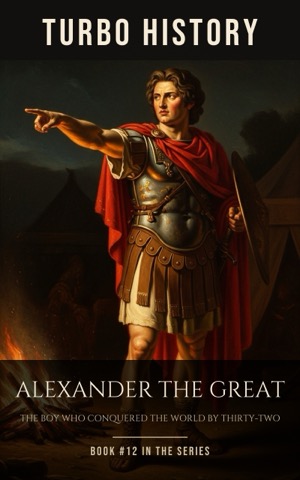
Alexander the Great: The Boy Who Conquered the World by Thirty-Two book cover

Alexander the Great - The Boy Who Conquered the World by Thirty-Two

First, because he is the benchmark everyone else in this collection is measured against, usually by their own choice. Eleven years of campaigning without losing a battle, an empire running from Greece to the Punjab, then dead at thirty-two in Babylon with no succession arranged and no heir old enough to matter. The Hellenistic world his generals carved up is the world the remaining four books take place inside.

Read the book
02

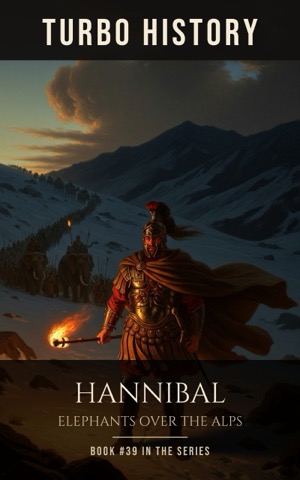
Hannibal: Elephants Over the Alps book cover

Hannibal - Elephants Over the Alps

Second, because Rome only gets interesting once you have seen how nearly it did not survive. He brought an army and elephants over the Alps, destroyed a much larger Roman force at Cannae in 216 BC in a single afternoon, and then spent fifteen years camped in Italy while Rome simply declined to negotiate. Losing that slowly, and refusing to stop, is what taught Rome how to win everything afterwards.

Read the book

03

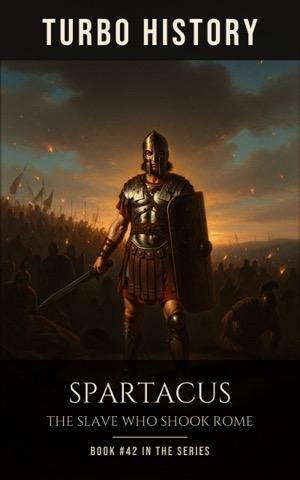
Spartacus: The Slave Who Shook Rome book cover

Spartacus - The Slave Who Shook Rome

Third, because the ancient world makes no sense without the people it was built on, and this is the one occasion they nearly took it apart. A gladiator breaks out of a training school at Capua with about seventy others and ends up commanding tens of thousands, beating consular armies for two years. Crassus finished it, and six thousand survivors were crucified along the road to Rome as a notice to everybody else.

Read the book

04

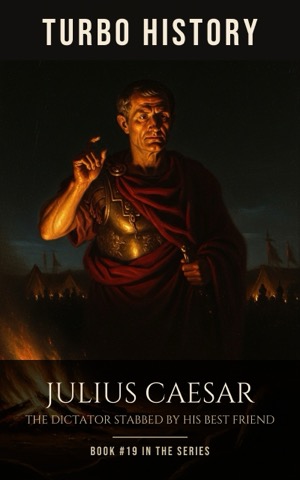
Julius Caesar: The Dictator Stabbed by His Best Friend book cover

Julius Caesar - The Dictator Stabbed by His Best Friend

Fourth, because the republic that survived Hannibal and Spartacus does not survive him. Eight years conquering Gaul, an account of it he wrote himself and had circulated at home, then the Rubicon, a civil war against his own side, and the title of dictator for life. Around sixty senators decided that was the end of the discussion and stabbed him in a hall beside Pompey's theatre in March 44 BC.

Read the book

05

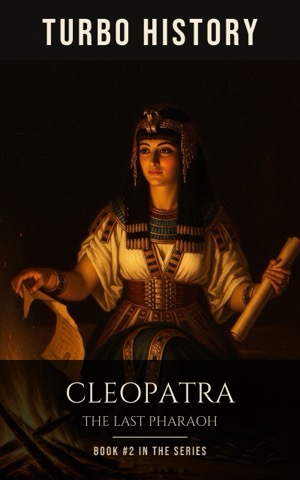
Cleopatra book cover

Cleopatra

Last, because she is the closing of the world the other four lived in. A Macedonian Greek ruling Egypt nearly three hundred years after one of Alexander's generals took it, and reputedly the only one of her line who troubled to learn Egyptian. She backed Caesar, then Antony, lost at Actium in 31 BC, and with her death the following year Egypt became a province and the Hellenistic age was finished.

Read the book
End of the path

Egypt becomes a Roman province in 30 BC, and the republic that took it had already been dead for a generation. If you would rather follow the conquering instinct forward than stay in the ancient world, three of these five continue into the Conquerors path.

Fair warning

These are not academic books. You will not find footnotes to chase, family trees to memorise, or ten pages on the logistics of a treaty. Every book ends with a page of proper ones to go to next if you want that depth. If you want the story and the big picture in an hour, you are home.

Ancient World books go free most weekends.

Most weekends one Turbo History book goes completely free on Amazon, and often it is one of these. Leave your email and we will tell you which one, before it goes back to full price.

If you liked The Ancient World

Same series, same hour, next to the ones you have just read.