One rebellion,told from both sides.

Three men who made the break and one who was on the receiving end of it. The king is in this collection on purpose, and reading him third changes the other three.

4 books  ·  about 4 hours end to end  ·  £2.99 / $2.99 each  ·  free with Kindle Unlimited

George Washington book coverAlexander Hamilton book coverGeorge III book coverThomas Jefferson book cover

Thirteen colonies with no army, no navy, no treasury and no country took on the leading power in the world and won, and the standard account of how tends to leave out both the money and the losing side. So this path runs Washington for the war, Hamilton for the machinery that paid for it, George III for the view from London, and Jefferson for the words and the enormous contradiction underneath them. Four books, four vantage points, one event that none of the four saw whole.

The order runs by when each man's story ends, which happens to be a good argument too. Washington first because without an army in the field nothing else matters. Hamilton second because he is the one who works out that independence is an accounting problem. George III third, once you have seen what he was up against, because a mad tyrant is a poor explanation for losing a war. Jefferson last, because his sentence about equality is the promise the whole thing is measured against, and he owned people while writing it.

Four books, an hour each, roughly four hours. This is not a military history: you will get Yorktown in outline, not in order of battle. Slavery is not treated as a footnote to the founding, particularly in the fourth book, and George III's illness is described as the medical uncertainty it remains.

The reading path

4 books, in the order that makes each one hit harder than it would alone.

01

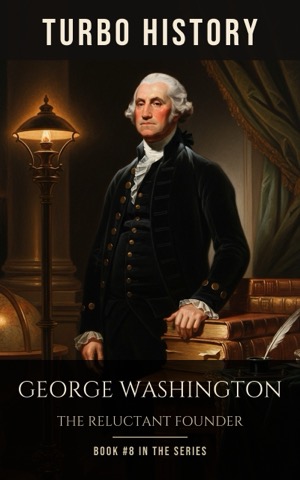
George Washington book cover

George Washington

Start here because the rebellion survives eight years mainly by not losing, and that is Washington's particular skill. He lost a great many battles, kept an unpaid army in existence through Valley Forge, and won at Yorktown in 1781 with a French fleet doing half the work. Then the decisive act: he handed his commission back in 1783 and went home, and later left the presidency after two terms when nobody was making him.

Read the book
02

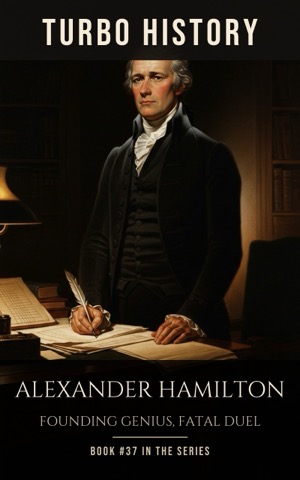
Alexander Hamilton: Founding Genius, Fatal Duel book cover

Alexander Hamilton - Founding Genius, Fatal Duel

Second, because independence was won on credit and Hamilton is the one who understood that. Born illegitimate on Nevis and orphaned, he came to New York as a student, served as Washington's aide, and led a bayonet charge at Yorktown. As the first Treasury Secretary he assumed the states' war debts, founded a national bank and made the new country creditworthy. He died in 1804 from a wound taken in a duel with the sitting vice president.

Read the book

03

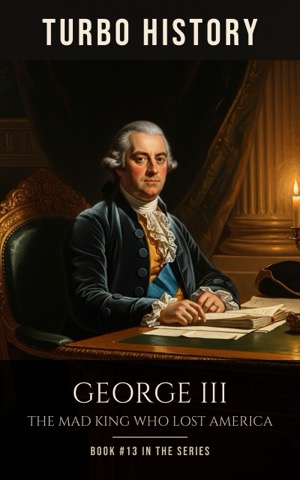
George III: The Mad King Who Lost America book cover

George III - The Mad King Who Lost America

Third, because the revolution reads very differently once you have the other party in the room. He reigned for fifty-nine years, longer than any king before him, and his American war was one crisis among many: France, Ireland, India, and a Parliament he did not simply command. The recurrent madness that produced the Regency in 1811 came mostly after the colonies were lost, and its cause is still argued over rather than settled.

Read the book

04

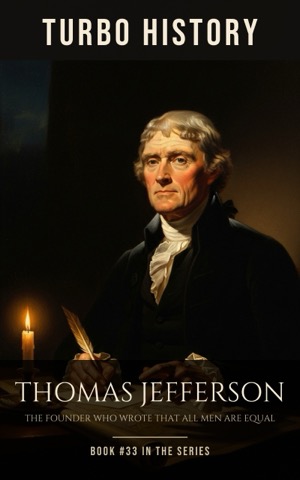
Thomas Jefferson: The Founder Who Wrote That All Men Are Equal book cover

Thomas Jefferson - The Founder Who Wrote That All Men Are Equal

Finish here, because Jefferson wrote the promise the other three books are judged against and did not keep it. He drafted the Declaration at thirty-three, doubled the country with the Louisiana Purchase in 1803, and founded a university. He also enslaved more than six hundred people across his life and freed almost none of them. He died on 4 July 1826, fifty years to the day after the document, hours before John Adams.

Read the book
End of the path

The path ends in 1826, with Jefferson dying on the fiftieth anniversary of the Declaration. Where it goes next is the American Presidents collection, which picks up the office these men invented and follows it to the twentieth century.

Fair warning

These are not academic books. You will not find footnotes to chase, family trees to memorise, or ten pages on the logistics of a treaty. Every book ends with a page of proper ones to go to next if you want that depth. If you want the story and the big picture in an hour, you are home.

American Revolution books go free most weekends.

Most weekends one Turbo History book goes completely free on Amazon, and often it is one of these. Leave your email and we will tell you which one, before it goes back to full price.

If you liked The American Revolution

Same series, same hour, next to the ones you have just read.