Tsars, an empress,and a mad monk.

Four hundred years of absolute power in one country, from the first man crowned tsar to the man who lost the throne. The empire in these books never reforms, it only breaks.

4 books  ·  about 4 hours end to end  ·  £2.99 / $2.99 each  ·  free with Kindle Unlimited

Ivan the Terrible book coverCatherine the Great book coverGrigori Rasputin book coverNicholas II book cover

Russia is a country that has never quite solved the problem of what happens when one man holds everything. Ivan invents the office of tsar and then demonstrates, at length, what an unchecked one can do to his own nobility and his own city. Catherine takes the same absolute power two centuries later, applies it with genuine intelligence, expands the empire enormously, and still cannot touch the thing underneath it, which is serfdom. Rasputin shows how a court that answers to nobody can be captured by one persuasive outsider. Nicholas inherits all of it and drops it.

So the sequence is chronological, and it is also a slow demolition. Each book widens the crack in the same wall. You can read any of them cold, and the Rasputin book in particular works fine as a standalone curiosity, but the last two are far better read together: Rasputin is the symptom and Nicholas is the patient, and the diagnosis arrives in 1917.

Four books, an hour each, roughly four hours for four hundred years. Some of this is grim without relief, particularly the fate of the last imperial family, and it is told plainly rather than dramatically. If you want the Soviet century, it is not here yet.

The reading path

4 books, in the order that makes each one hit harder than it would alone.

01

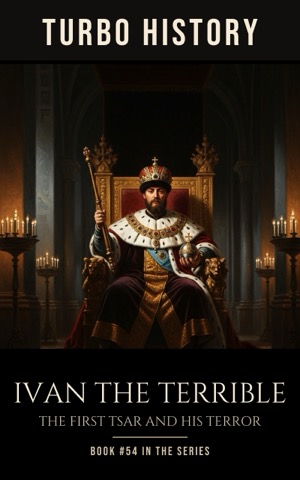
Ivan the Terrible: The First Tsar and His Terror book cover

Ivan the Terrible - The First Tsar and His Terror

Start here because Ivan invents the job every other person in this collection inherits. The first Russian ruler crowned tsar, in 1547, he expands Russia east and south, then turns the state inward with the oprichnina, a personal terror apparatus that gutted the nobility and sacked Novgorod. He is said to have struck his heir a fatal blow in 1581 - contemporaries treated it as rumour - and the dynasty ran out.

Read the book
02

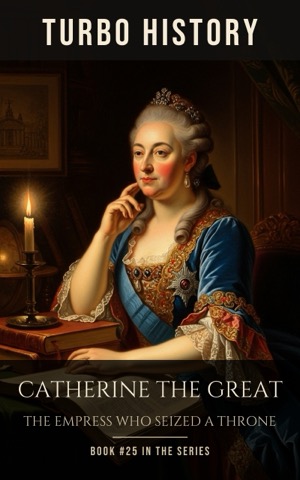
Catherine the Great: The Empress Who Seized a Throne book cover

Catherine the Great - The Empress Who Seized a Throne

Second, for the strongest possible case that absolutism can be done well, and the point where that case fails. Born in Prussia, married into the Romanovs, she deposed her own husband in 1762 and ruled for thirty-four years. She corresponded with the philosophes, founded schools and hospitals, and enlarged the empire hugely. She also left serfdom intact and harder, which is the crack the fourth book falls through.

Read the book

03

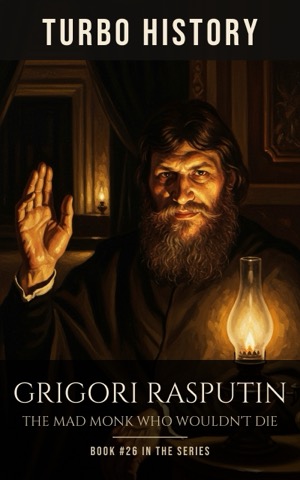
Grigori Rasputin: The Peasant They Called the Mad Monk book cover

Grigori Rasputin - The Peasant They Called the Mad Monk

Third, because he is the clearest evidence that by the dynasty's last years nobody was actually running the place. A Siberian peasant with no office and no education ends up advising the imperial family, because he could apparently ease the heir's haemophilia when doctors could not. The story of his killing in December 1916 has been embroidered for a century; the book separates what is documented from what is legend.

Read the book

04

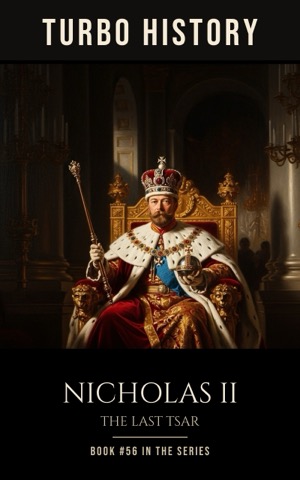
Nicholas II: The Last Tsar book cover

Nicholas II - The Last Tsar

Finish here, because everything the first three books set up collapses on this one man's watch. He inherited absolute power without the temperament for it, took personal command of the army in 1915 and personal blame with it, abdicated in March 1917, and was shot with his wife, four daughters and son at Yekaterinburg in July 1918. Three centuries of Romanov rule ended in a cellar.

Read the book
End of the path

The path stops in 1918 with the end of the Romanovs, which is where most people expect Russian history to get started. What follows the last tsar belongs to a collection that does not exist yet.

Fair warning

These are not academic books. You will not find footnotes to chase, family trees to memorise, or ten pages on the logistics of a treaty. Every book ends with a page of proper ones to go to next if you want that depth. If you want the story and the big picture in an hour, you are home.

Russia books go free most weekends.

Most weekends one Turbo History book goes completely free on Amazon, and often it is one of these. Leave your email and we will tell you which one, before it goes back to full price.

If you liked Russia

Same series, same hour, next to the ones you have just read.