If you want the short modern biography, read Felipe Fernandez-Armesto's Columbus, which does the whole life in 218 pages without inventing anything. If you want the classic, read Samuel Eliot Morison's Admiral of the Ocean Sea, written by a man who sailed the routes himself, and read it knowing it was published in 1942 and reads that way. If you want the voyages narrated in full, Laurence Bergreen's Columbus: The Four Voyages does that. If you want the consequences rather than the man, read Charles C. Mann's 1493. And if you have under an hour rather than a month, ours covers the whole story in one sitting.
Every book listed here is real, in print or easily found through a library, and worth the time. Reading times are honest estimates from page count, not measured. One thing needs saying up front: the assessment of Columbus has changed substantially over the last eighty years, and the books on this page reflect very different judgements depending on when they were written. Morison in 1942 treats him as a great navigator and largely sets the aftermath aside. Sale in 1990 treats him as the opening act of an ecological and human catastrophe. Fernandez-Armesto and the Phillipses sit between them and try to explain him in the terms of his own century. We have included primary sources on both sides of that argument, including Columbus's own writings and the eyewitness testimony of Bartolome de las Casas about what happened to the Taino. Read more than one of these and the disagreement itself becomes the useful part.
The short version
Sorted by what you want, not by what is most famous.
| Book | Length | Best for |
|---|---|---|
| Admiral of the Ocean Sea: A Life of Christopher Columbus Samuel Eliot Morison, 1942 | ~730 pages About 21 hours | The classic, and still the best on seamanship. Written by a historian who sailed the routes |
| Columbus Felipe Fernandez-Armesto, 1991 | ~218 pages About 6 hours | The best short modern life. Sceptical, sourced, and finishable in a weekend |
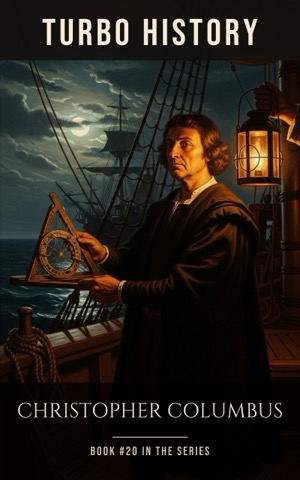
| Christopher Columbus: The Voyage That Broke the World Open Turbo History · ours | ~6,700 words Under an hour | The whole story in one sitting. The four voyages, the man, and what 1492 set off |
| The Worlds of Christopher Columbus William D. Phillips Jr. and Carla Rahn Phillips, 1992 | ~322 pages About 9 hours | The scholarly context. Why a Genoese wool weaver's son could get four fleets out of Spain |
| Columbus: The Four Voyages Laurence Bergreen, 2011 | ~423 pages About 12 hours | The voyages told as narrative. All four crossings, including the disastrous later ones |
| The Conquest of Paradise: Christopher Columbus and the Columbian Legacy Kirkpatrick Sale, 1990 | ~453 pages About 13 hours | The case for the prosecution. The 1492 quincentenary argument in full |
| The Four Voyages Christopher Columbus, edited and translated by J. M. Cohen, 1969 | ~320 pages About 9 hours | Primary source. Columbus in his own words, with his son's account filling the gaps |
| A Short Account of the Destruction of the Indies Bartolome de las Casas, 1552 | ~192 pages About 5 hours | Primary source on the aftermath. A Spanish eyewitness cataloguing what was done to the Taino |
| 1493: Uncovering the New World Columbus Created Charles C. Mann, 2011 | ~535 pages About 15 hours | The consequences rather than the man. What the Columbian Exchange actually did to the planet |
The picks, in detail
01
Admiral of the Ocean Sea: A Life of Christopher Columbus
Morison led an expedition that retraced Columbus's crossings under sail, and nobody has since written better on the navigation, the ships, the winds and the landfalls. It won the Pulitzer in 1943 and it is the book every later account argues with. It is also a product of 1942: admiring in tone, brisk about the enslavement and the killing, and confident in a way modern historians are not. Read it for the sea and read something else for the consequences.
02
Columbus
Fernandez-Armesto strips the story back to what the documents will actually support and is unusually good on Columbus as a self-made social climber obsessed with titles and status. It is the most reliable single introduction on this page and it neither celebrates nor prosecutes him. The compression is the cost: arguments arrive fully formed with little room to show the working, and readers new to the period may want the fuller narrative first.
03
Christopher Columbus: The Voyage That Broke the World Open ours
Every book on this list goes deeper than ours, and most of them are hard work. That is not a criticism, it is the entire point of them. Morison gives you 730 pages of navigation and seamanship. Mann gives you 535 pages on what the collision did to the planet. They are good books, and they want weeks of your life.
If you are studying this properly, or sitting an exam on it, buy one of those and give it the time it deserves. We are not pretending to compete with them.
If you are not, ours might suit you better. It starts at a cheese stand in Genoa, goes to sea at fourteen, and includes the 1476 shipwreck off Portugal that he survived by swimming six miles to shore, which is the accident that put him in the right country to marry into exploration circles and start pitching. Then the rejection by Portugal, the years of waiting in Spain, and the arithmetic he got wrong by about a quarter. Then all four voyages, the landfall, the encomienda system, the slave raiding, the rebellion on Hispaniola and his arrest by his own sponsors. The last chapter is about what 1492 actually set in motion: the Columbian Exchange in both directions, the collapse of the indigenous population, the start of the Atlantic slave trade, and why statues of him came down in 2020. It does not pretend the argument about him is settled.
That is what the whole series is for. Love history, but hate how it was taught at school? Same. School turned it into a memory test: names, dates, family trees, exam. The actual story never stood a chance. Turbo History is one figure or one event per book, told in under an hour. The rise, the fall, and why it still matters. Dates included, memorising optional. Sources at the back if you want to go further, and every book on this page is a good place to go next.
04
The Worlds of Christopher Columbus
Two specialists in medieval Iberian and maritime history explain the world Columbus came out of: Genoese trade networks, Portuguese Atlantic exploration, Castilian politics, and the existing knowledge about winds and distances. It answers the question most biographies skip, which is why anyone funded him at all. It is a context book rather than a life story, so the voyages themselves get less space than you might expect and the tone is academic throughout.
05
Columbus: The Four Voyages
Bergreen is a narrative writer and this is the most readable full account of what actually happened on each crossing, including the third and fourth voyages that most books rush through, the rebellion on Hispaniola and Columbus being shipped home in chains. He does not soften the violence against the Taino. Specialists have criticised it for leaning on secondary sources and for some loose detail, so treat it as a strong story built on other people's research rather than as original scholarship.
06
The Conquest of Paradise: Christopher Columbus and the Columbian Legacy
Sale wrote the book that shifted the popular argument, treating Columbus as the beginning of ecological plunder, slavery and colonial violence rather than as a navigator with unfortunate consequences. It is the clearest statement of the revisionist case and it changed how the 1992 anniversary was discussed. It is also advocacy, and historians have pushed back on its idealised picture of pre-contact societies, so read it as one side of an argument rather than as settled history.
07
The Four Voyages
This Penguin Classics volume collects the surviving log-book material, letters and dispatches, joined up with narrative drawn from the life written by his son Ferdinand and other contemporaries. Reading him directly is the fastest way to understand the man: the certainty, the arithmetic, the religious conviction, and the way he describes the people he met. Two caveats. The original first-voyage log is lost and survives only through Las Casas's abstract, and Columbus was writing to persuade his patrons, so nothing in it is disinterested.
08
A Short Account of the Destruction of the Indies
Las Casas went to Hispaniola as a settler, became a Dominican friar, and wrote this to force the Spanish crown to act on what he had seen. It is the closest thing we have to contemporary testimony about the destruction of the Caribbean populations, and it is short. It is also a polemic written to move a king, its numbers are widely regarded as inflated, and it was later weaponised by Spain's rivals. Read the Penguin edition and read Pagden's introduction before the text.
09
1493: Uncovering the New World Columbus Created
Mann barely writes about Columbus and instead traces what followed: crops, diseases, silver, slavery, earthworms, malaria, and the global economy that came out of the collision. It is the book that makes the scale of 1492 comprehensible, and it is genuinely enjoyable to read. It is not a biography, it ranges enormously wide, and if you want to know what Columbus did on any given day you will not find it here.
Questions people actually ask
What is the best book about Christopher Columbus?
For a single modern biography, Felipe Fernandez-Armesto's Columbus (1991) is the most reliable and it is only 218 pages. Samuel Eliot Morison's Admiral of the Ocean Sea (1942) is the classic and still unmatched on the sailing, but it is a book of its era and treats the human cost lightly. Most readers get more out of pairing a biography with something on the consequences, such as Charles C. Mann's 1493.
Where should I start with Christopher Columbus?
Start with Fernandez-Armesto's Columbus for the life, then read Mann's 1493 for what followed. That pairing gives you the man in his own century and the scale of what his voyages triggered, without committing you to Morison's 730 pages. If you would rather have the voyages as a continuous story, Laurence Bergreen's Columbus: The Four Voyages is the readable option.
Which Columbus books deal honestly with what happened to indigenous peoples?
Kirkpatrick Sale's The Conquest of Paradise makes the case at book length. Charles C. Mann's 1493 covers the demographic and biological consequences across both hemispheres. For contemporary testimony, Bartolome de las Casas's A Short Account of the Destruction of the Indies is a Spanish eyewitness account written to shame the crown into acting, though its figures are widely thought to be inflated and it was written as a polemic.
Why do Columbus books disagree with each other so much?
Because the assessment of him has changed substantially and the books were written at different points in that change. A 1942 biography was written when he was a national hero and a navigational marvel. A 1990 book was written into the argument over the 1992 anniversary, when the question had become what his voyages cost the people already living there. Both use largely the same documents. The difference is which questions the author thought were worth asking.
Are there primary sources by Columbus himself?
Yes, though with complications. His letters and dispatches survive, and the Penguin Classics volume The Four Voyages collects them alongside narrative from his son Ferdinand's biography. The original log of the first voyage is lost and reaches us only through an abstract made by Bartolome de las Casas. Everything Columbus wrote was written to persuade the people funding him, so read it as argument rather than as a neutral record.
This book is free sometimes. Want to know when?
Christopher Columbus goes free on Amazon from time to time, along with the rest of the series. Leave your email and we will tell you the moment it does.
More from the series
One figure or one event per book. Under an hour each.