If you want one full biography, read Susan Butler's East to the Dawn. If you want the same story told better, read Mary Lovell's The Sound of Wings. If you want to know why she mattered rather than how she died, read Susan Ware's Still Missing, which is the best book on this page. And if you have under an hour rather than a fortnight, ours covers the whole life in one sitting. Everything below is sorted by what you are actually trying to get out of it.
Every book listed here is real, in print or easily found, and worth the time. Reading times are honest estimates from page count at roughly 250 words per minute. Two of these books argue opposite theories about her disappearance, and we say which is which rather than pretending there is a settled answer.
The short version
Sorted by what you want, not by what is most famous.
| Book | Length | Best for |
|---|---|---|
| East to the Dawn: The Life of Amelia Earhart Susan Butler, 1997 | ~490 pages About 14 hours | The fullest modern life. Ten years of archive work turned into one continuous narrative |
| The Sound of Wings: The Life of Amelia Earhart Mary S. Lovell, 1989 | ~420 pages About 12 hours | The best readable one-volume life. Fluent storytelling that also takes George Putnam seriously |
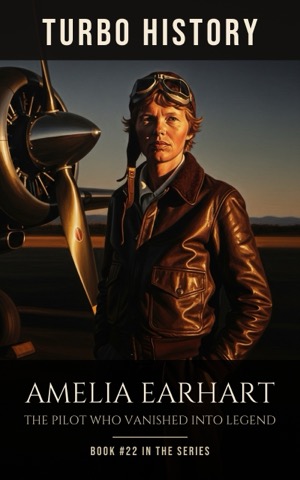
| Amelia Earhart: The Pilot Who Vanished Into Legend Turbo History · ours | ~7,800 words Under an hour | The whole life in one sitting. How she got in a cockpit, how she became famous, and what she actually changed |
| Amelia Earhart: A Biography Doris L. Rich, 1989 | ~320 pages About 9 hours | The sober, evidence-first life. Short enough for a weekend, careful enough to trust |
| Still Missing: Amelia Earhart and the Search for Modern Feminism Susan Ware, 1993 | ~300 pages About 8 hours | The argument rather than the life story. Why Earhart mattered to American women |
| Amelia Earhart: The Mystery Solved Elgen M. Long and Marie K. Long, 1999 | ~320 pages About 9 hours | The crashed-and-sank case, argued in detail. Fuel, radio and navigation reconstructed hour by hour |
| Finding Amelia: The True Story of the Earhart Disappearance Ric Gillespie, 2006 | ~296 pages About 8 hours | The rival theory and the primary documents. Radio logs, messages and search records laid out |
| The Fun of It Amelia Earhart, 1932 | ~218 pages About 6 hours | Earhart in her own voice. Written five years before she vanished, with no hindsight in it |
| Amelia Lost: The Life and Disappearance of Amelia Earhart Candace Fleming, 2011 | ~118 pages About 3 hours | The fastest honest introduction. Written for younger readers but researched like an adult book |
The picks, in detail
01
East to the Dawn: The Life of Amelia Earhart
Butler spent a decade in the letters, diaries and flight records, and it shows: this is the most complete account of Earhart as a working aviator rather than a legend. It is strong on the technical side of flying and navigation, which most Earhart books skate over. The cost is pace, since the early chapters move slowly and the detail can pile up before the famous flights begin.
02
The Sound of Wings: The Life of Amelia Earhart
Lovell writes clean narrative biography and keeps the story moving, which makes this the easiest full-length Earhart book to finish. She is unusually good on the marriage to George Putnam and on how the publicity machine was built. It is older than Butler and does not have the later research on the disappearance, so treat the final chapters as one view among several.
03
Amelia Earhart: The Pilot Who Vanished Into Legend ours
Every book on this list goes deeper than ours, and most of them are hard work. That is not a criticism, it is the entire point of them. Butler gives you 490 pages built on ten years in the archives. Long and Gillespie will take you through radio logs and fuel calculations. They are good books, and they want weeks of your life.
If you are researching Earhart properly, that is exactly the right trade. Buy one and give it the time it deserves. We are not pretending to compete with them.
If you are not, ours might suit you better. It starts with a tomboy childhood in Kansas, a father drinking the family downwards, and six high schools before she was finished. Then the plane that changed her mind, the flights that made her the most famous woman in the world, and the last radio call. It ends on what she actually changed: that she made flying normal, the door she kicked open for other women, and how the mystery of her death ended up eating her legacy. There is a section on what she got wrong, because the legend has been sanded smooth and the real person is more interesting than the statue.
That is what the whole series is for. Love history, but hate how it was taught at school? Same. School turned it into a memory test: names, dates, family trees, exam. The actual story never stood a chance. Turbo History is one figure or one event per book, told in under an hour. The rise, the fall, and why it still matters. Dates included, memorising optional. Sources at the back if you want to go further, and every book on this page is a good place to go next.
04
Amelia Earhart: A Biography
Rich wrote this for the Smithsonian and it has that tone: measured, sourced, and impatient with myth. It is the best corrective if you have absorbed the film-and-legend version of Earhart and want the documented one. It is drier than Lovell and gives less space to the disappearance, which some readers will find a relief and others a let-down.
05
Still Missing: Amelia Earhart and the Search for Modern Feminism
Ware deliberately refuses to write another disappearance book and instead asks what Earhart meant as a public figure between the two waves of feminism. It is the sharpest thinking on this shelf and it changes how you read everything else. It is a work of argument, so it assumes you already know the basic chronology and it will frustrate anyone who wants a cradle-to-Pacific narrative.
06
Amelia Earhart: The Mystery Solved
Long was a professional navigator and pilot, and the book's strength is that it treats the last flight as an engineering problem: fuel load, headwinds, radio frequencies, dead reckoning. If you want the simplest explanation properly stress-tested, this is it. The title oversells the certainty, and the technical reconstruction gets heavy going in the middle.
07
Finding Amelia: The True Story of the Earhart Disappearance
Gillespie runs the TIGHAR expeditions and argues that Earhart came down on Nikumaroro, so read it as advocacy, not neutral history. What makes it worth the time is the documentary spine: the actual radio traffic and search reports, reproduced and picked apart. Read it alongside the Longs and you get the real shape of the disagreement rather than one side's version.
08
The Fun of It
This is her own account of learning to fly, the 1928 Atlantic crossing and the other women flying at the time, put out fast to capitalise on her fame. It is light and a bit promotional, and she is clearly managing her image, but the voice is dry, funny and recognisably hers. Do not read it for facts about the last flight, since it predates that entirely.
09
Amelia Lost: The Life and Disappearance of Amelia Earhart
Fleming cuts between the life and the hours after the last radio call, which makes a short book feel unusually gripping. The sourcing is genuinely good and it does not tidy up the uncertainty about what happened. It is aimed at children, so adults will find the explanations basic in places, but as a two-evening orientation it beats most adult summaries.
Questions people actually ask
What is the best book about Amelia Earhart?
Susan Butler's East to the Dawn (1997) is the standard full-length life, built on about ten years of archival research and unusually good on the flying itself. If you want one book and do not mind 490 pages, that is the one. Mary Lovell's The Sound of Wings is the better-written alternative if readability matters more to you than completeness.
Where should I start with Amelia Earhart?
Start with Mary Lovell's The Sound of Wings. It is a proper narrative biography, it moves, and it gives you the whole arc including the marriage to George Putnam and the publicity machine behind her fame. Move to Butler afterwards if you want more depth, or to Susan Ware if you want to understand why she mattered.
What is the best short book about Amelia Earhart?
Candace Fleming's Amelia Lost, at roughly 118 pages, is the quickest way in and the research behind it is sound even though it was written for younger readers. For an adult short book, Doris Rich's Amelia Earhart: A Biography is about 320 pages and stays firmly with the evidence. Our own hour-long version covers the whole life if you want the shape of it tonight.
What is the best book on Amelia Earhart's disappearance?
There is no consensus answer, because the two serious books argue opposite cases. Elgen and Marie Long's Amelia Earhart: The Mystery Solved makes the fuel-and-navigation case that she ran out of fuel and went into the sea. Ric Gillespie's Finding Amelia argues for a landing on Nikumaroro and reprints a lot of the radio evidence. Read both, in that order, and treat any book claiming to have settled it with suspicion.
Is there a book about Amelia Earhart beyond the mystery of her death?
Yes, and it is the best book on this list. Susan Ware's Still Missing deliberately sets the disappearance aside and looks at Earhart as a public figure who kept feminist ideas alive in the 1930s. It is an argument rather than a life story, so read a straight biography first, but it is the one that will stay with you.
This book is free sometimes. Want to know when?
Amelia Earhart goes free on Amazon from time to time, along with the rest of the series. Leave your email and we will tell you the moment it does.
More from the series
One figure or one event per book. Under an hour each.