If you want one full biography, read Claire Tomalin's Jane Austen: A Life. If you want the most detailed account of the family and the money, read Park Honan's Jane Austen: Her Life or Deirdre Le Faye's Jane Austen: A Family Record. If you are more interested in how she became a global brand than in what she had for breakfast, read Claire Harman's Jane's Fame, which is the most surprising book on this page. And if you have under an hour rather than a fortnight, ours covers the whole life in one sitting. Everything below is sorted by what you are actually trying to get out of it.
Every book listed here is real, in print or easily found, and worth the time. Reading times are honest estimates from page count at roughly 250 words per minute. If you came here looking for Austen's own novels rather than books about her life, this is not that list, and any bookshop will serve you better. One thing to know before you buy any of these: the documentary record is thin, because Cassandra Austen burned or cut most of her sister's letters after she died, and the family's Victorian memoir tidied Jane into a mild maiden aunt. Every biographer on this page is working around those two facts, and the good ones say so.
The short version
Sorted by what you want, not by what is most famous.
| Book | Length | Best for |
|---|---|---|
| Jane Austen: A Life Claire Tomalin, 1997 | ~361 pages About 10 hours | The standard modern life. The best single book if you are only going to read one |
| Jane Austen: Her Life Park Honan, 1987 | ~452 pages About 13 hours | The fullest narrative life. Strong on the brothers, the money and the writing itself |
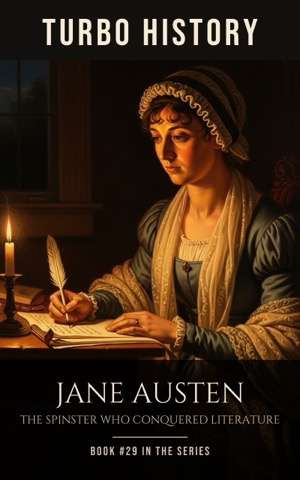
| Jane Austen: The Spinster Who Conquered Literature Turbo History · ours | ~7,300 words Under an hour | The whole life in one sitting. The money, the family, the six novels, and why almost none of the letters survive |
| Jane Austen: A Family Record Deirdre Le Faye, 2004 | ~377 pages About 11 hours | The evidence with the speculation stripped out. What is documented and nothing else |
| Jane Austen at Home: A Biography Lucy Worsley, 2017 | ~400 pages About 11 hours | The most readable one. The life told through the houses she lived in and the ones she lost |
| The Real Jane Austen: A Life in Small Things Paula Byrne, 2013 | ~380 pages About 11 hours | The corrective to the cosy version. Austen as worldlier and more political than the myth allows |
| Jane's Fame: How Jane Austen Conquered the World Claire Harman, 2009 | ~341 pages About 10 hours | What happened after she died. How six novels turned into an industry |
| A Memoir of Jane Austen and Other Family Recollections James Edward Austen-Leigh, 1870 | ~276 pages About 8 hours | The source of the myth, read as evidence. Where the sweet maiden aunt came from |
The picks, in detail
01
Jane Austen: A Life
Tomalin is a professional biographer rather than a literary critic, and she is very good at the ordinary business of a woman's life in 1800: childbirth, money, illness, dependent spinsterhood. She is honest about the holes in the record instead of filling them with guesses. The cost is patience, since she spends around a hundred pages on relatives and neighbours before Austen is even eighteen.
02
Jane Austen: Her Life
Honan went through the family papers harder than almost anyone before him and reconstructs Austen inside a large, busy, financially anxious clan. He is better than Tomalin on how the novels were actually written and revised over decades. It is long, older, and the prose can be dense, so it works better as a second book than a first.
03
Jane Austen: The Spinster Who Conquered Literature ours
Every book on this list goes deeper than ours, and most of them are hard work. That is not a criticism, it is the entire point of them. Honan gives you 452 pages of family papers. Le Faye gives you 377 pages of documented record with the guesswork removed. They are good books, and they want weeks of your life.
If you are studying Austen, writing about her, or sitting an exam on her, buy one of those instead. Give it the time it deserves. We are not pretending to compete with them.
If you are not, ours might suit you better. It starts in a freezing Hampshire December in 1775, in a rectory with more children than money, and a clergyman father tutoring boarding pupils and farming rented acres to stay afloat. It covers the brother the family did not talk about, the school that nearly killed her, the private theatricals, the years of writing at a small table and hiding the pages, the four novels published anonymously in her lifetime and the two that came out after she died. It follows the illness through 1816 and 1817 to Winchester, and to a cathedral epitaph that praised her mind without mentioning that she wrote books. There is a section on what she left out of her fiction, war, slavery, servants, and on the letters Cassandra burned, because the polite family version has been sanded smooth and the real person is more interesting than the statue.
That is what the whole series is for. Love history, but hate how it was taught at school? Same. School turned it into a memory test: names, dates, family trees, exam. The actual story never stood a chance. Turbo History is one figure or one event per book, told in under an hour. The rise, the fall, and why it still matters. Dates included, memorising optional. Sources at the back if you want to go further, and every book on this page is a good place to go next.
04
Jane Austen: A Family Record
Le Faye edited Austen's surviving letters and knows the paper trail better than anyone, and this book is essentially the record laid out year by year with almost no interpretation. If you want to check a claim you read somewhere, this is where you check it. It is a reference work in the shape of a biography, so it is dry and it will not give you a theory about who she was.
05
Jane Austen at Home: A Biography
Worsley organises the life around rooms and addresses, which turns out to be the right frame for a woman whose security depended entirely on which male relative was housing her that year. It is warm, fast and genuinely good on the Bath years and the misery of being moved around. It is lighter on the novels and on the literary argument, so serious readers will want Tomalin or Honan as well.
06
The Real Jane Austen: A Life in Small Things
Byrne builds each chapter around an object, a topaz cross, a writing box, a bathing machine, and uses it to argue that Austen knew far more of slavery, theatre, illegitimacy and empire than the maiden aunt image suggests. The argument is convincing and the individual essays are excellent. Because it is thematic rather than chronological, it is a poor first book if you do not already know the basic sequence of her life.
07
Jane's Fame: How Jane Austen Conquered the World
Harman tracks the reputation rather than the woman: the years out of print, the nephew's memoir, the Victorian cult, the scholars, the films, the tea towels. It explains why Austen means something so different now from what she meant in 1817, and it is the most enjoyable book on this page. It is deliberately not a biography, so read it after you have read one.
08
A Memoir of Jane Austen and Other Family Recollections
This is the book her nephew wrote fifty years after her death, and it invented the version of Austen that everyone spent the next century arguing with: modest, contented, unambitious, faintly holy. Read it for what it reveals about the family rather than what it tells you about Jane. The modern Oxford edition is worth having because it prints Henry Austen's earlier notes alongside it and explains what is being smoothed over.
Questions people actually ask
What is the best Jane Austen biography?
Claire Tomalin's Jane Austen: A Life (1997) is the usual answer and a fair one. It is around 361 pages, it is honest about how little evidence survives, and it is very good on the practical realities of an unmarried woman's life at the time. Park Honan's Jane Austen: Her Life is the fuller alternative if you want more on the family and on how the novels were built.
Where should I start reading about Jane Austen's life?
Start with Lucy Worsley's Jane Austen at Home if you want something readable, or Tomalin if you want the standard. Worsley organises the life around the houses Austen lived in and lost, which is a good way into a story that is really about money and dependence. Move to Honan or Le Faye afterwards if you want depth.
Why do Jane Austen biographies disagree so much?
Because there is very little to go on. Cassandra Austen destroyed or cut most of her sister's letters after she died, so only about 160 survive out of what must have been thousands. That leaves biographers filling a large gap, and the ones worth reading, Tomalin, Honan and Le Faye, say clearly where the evidence stops and the inference starts.
Is the family memoir of Jane Austen reliable?
Not as biography, no. James Edward Austen-Leigh's Memoir, published in 1870, was written by a nephew who barely knew her, half a century after her death, and it deliberately presents a mild, contented, unambitious aunt. It is still worth reading, but as evidence of what the Victorian family wanted her to be rather than as an account of what she was.
What is the best short book about Jane Austen?
Claire Harman's Jane's Fame, at around 341 pages, is the shortest of the serious full-length options and the most fun, though it is about her afterlife rather than her life. For the life itself, the shortest reliable route is our own hour-long version, then Tomalin if it makes you want more.
This book is free sometimes. Want to know when?
Jane Austen goes free on Amazon from time to time, along with the rest of the series. Leave your email and we will tell you the moment it does.
More from the series
One figure or one event per book. Under an hour each.