If you want the definitive life, read Richard Westfall's Never at Rest, though it runs to over 900 pages. If you want the same scholarship at a third of the length, Westfall abridged it himself as The Life of Isaac Newton. If you want something short and beautifully written, read James Gleick's Isaac Newton, and if you want the shortest reliable overview, Rob Iliffe's Newton: A Very Short Introduction does it in 144 pages. And if you have under an hour rather than a fortnight, ours covers the whole life in one sitting. Everything below is sorted by what you are actually trying to get out of it.
Every book listed here is real, in print or easily found, and worth the time. Reading times are honest estimates from page count at roughly 250 words per minute. Newton's alchemy and his hidden anti-Trinitarian theology are no longer treated as embarrassments by serious biographers, and we say which books take them seriously rather than pretending the physics was the whole man.
The short version
Sorted by what you want, not by what is most famous.
| Book | Length | Best for |
|---|---|---|
| Never at Rest: A Biography of Isaac Newton Richard S. Westfall, 1980 | ~908 pages About 18 hours | The definitive scholarly life. Built on the manuscripts rather than the legend, mathematics and alchemy included |
| The Life of Isaac Newton Richard S. Westfall, 1993 | ~350 pages About 7 hours | Westfall's judgement without Westfall's technical apparatus. The best serious life at a manageable length |
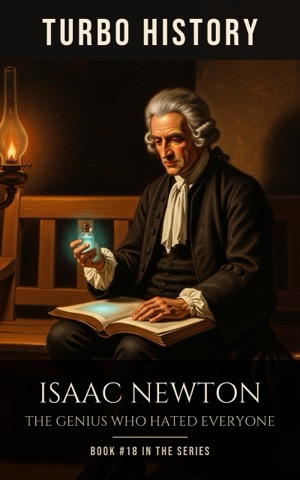
| Isaac Newton: The Genius Who Hated Everyone Turbo History · ours | ~7,400 words Under an hour | The whole life in one sitting. The plague years, the Principia, the Mint, and what he was actually like |
| Isaac Newton James Gleick, 2003 | ~288 pages About 6 hours | The best-written short life. More interested in the mind than the mathematics |
| Newton: A Very Short Introduction Rob Iliffe, 2007 | ~144 pages About 3 hours | The shortest reliable overview. Written by a leading Newton scholar, dense for its size |
| Priest of Nature: The Religious Worlds of Isaac Newton Rob Iliffe, 2017 | ~520 pages About 10 hours | The theology Newton hid for fifty years. A specialist book for readers who already know the outline |
| Newton and the Counterfeiter: The Unknown Detective Career of the World's Greatest Scientist Thomas Levenson, 2009 | ~320 pages About 7 hours | One narrow story told well. Newton hunting coiners through the London underworld for the Royal Mint |
| The Principia: Mathematical Principles of Natural Philosophy Isaac Newton, translated by I. Bernard Cohen and Anne Whitman, 1687, this translation 1999 | ~974 pages About 20 hours of reading, far longer if you follow the proofs | The source itself. For readers who will lean on Cohen's introductory guide as much as the text |
| Isaac Newton: The Last Sorcerer Michael White, 1997 | ~400 pages About 8 hours | The alchemical Newton. A readable biography with a strong thesis to push |
The picks, in detail
01
Never at Rest: A Biography of Isaac Newton
This is still the standard biography, the first to be built on sustained work with Newton's manuscripts rather than the polished legend. Westfall is very good on how strange Newton actually was, obsessive, secretive and often unpleasant. The cost is real: it is over 900 pages, the scientific passages assume some patience, and it is a book you finish over weeks rather than a weekend.
02
The Life of Isaac Newton
Westfall abridged his own giant biography, stripping out most of the technical mathematics and keeping the life and the argument. It is the best single-volume route into the serious scholarship. You lose the detail that made the big book authoritative, so if you want to understand the physics properly this is not enough on its own.
03
Isaac Newton: The Genius Who Hated Everyone ours
Every book on this list goes deeper than ours, and most of them are hard work. That is not a criticism, it is the entire point of them. Westfall gives you 908 pages built on the manuscripts. The Cohen and Whitman Principia runs to about 974 pages and expects you to follow geometric proofs. They are good books, and they want weeks of your life.
If you are studying Newton properly, or sitting an exam on him, that is exactly the right trade. Buy one and give it the time it deserves. We are not pretending to compete with them.
If you are not, ours might suit you better. It starts with a baby born so small nobody expected him to live, a father already dead, and a mother who left him behind at three to marry someone else. Then the schoolyard, Cambridge, and the plague years back at Woolsthorpe when calculus, optics and gravitation all arrived at once. It follows the rise through the Royal Society, the move to the Royal Mint, and the years of domination, with a chapter on what else was happening in a Europe rebuilding itself and racing to do science. It does not skip the darker inheritance: the rigged committee that destroyed Leibniz, the twenty-eight counterfeiters convicted and Chaloner hanged, the hoarding of discoveries for years, and the theology he hid because admitting it would have ruined him.
That is what the whole series is for. Love history, but hate how it was taught at school? Same. School turned it into a memory test: names, dates, family trees, exam. The actual story never stood a chance. Turbo History is one figure or one event per book, told in under an hour. The rise, the fall, and why it still matters. Dates included, memorising optional. Sources at the back if you want to go further, and every book on this page is a good place to go next.
04
Isaac Newton
Gleick writes beautifully and compresses a huge life into a book you can read in a few sittings, drawing heavily on Newton's own notebooks and letters. It captures the loneliness and the intensity better than almost anything else at this length. It is impressionistic rather than complete, so specialists find it thin, and it will not teach you how the Principia works.
05
Newton: A Very Short Introduction
Iliffe packs the science, the alchemy, the heretical theology and the Royal Mint years into a pocket-sized book. It is dense and assumes you will concentrate, so it reads slower than the page count suggests. As an orientation before tackling Westfall it is hard to beat.
06
Priest of Nature: The Religious Worlds of Isaac Newton
This is the fullest treatment of the religious writings Newton kept secret, and it changes how you read everything else he did. Iliffe takes the theology seriously on its own terms instead of treating it as an embarrassment. It is a long, closely argued academic book, and it is a poor choice as your first Newton book.
07
Newton and the Counterfeiter: The Unknown Detective Career of the World's Greatest Scientist
Levenson tells the story of Newton's pursuit of the counterfeiter William Chaloner as a genuine detective story, with 1690s London drawn in convincing detail. It is the most purely enjoyable book on this list and demands nothing technical of you. It also covers only a slice of Newton's life, so treat it as a companion piece, not a biography.
08
The Principia: Mathematical Principles of Natural Philosophy
This is the book that reorganised physics, and the Cohen and Whitman translation with Cohen's long guide is the version to use. Almost nobody reads it straight through: the geometry is unfamiliar, the argument is relentless, and the guide is often more useful than the text. Buy it to dip into and to see how Newton actually reasoned, not as a book to finish.
09
Isaac Newton: The Last Sorcerer
White builds his book around Keynes's claim that Newton was the last of the magicians rather than the first of the scientists, and he makes the alchemical years vivid. It is readable and opinionated, which is its appeal. Scholars think it pushes the thesis harder than the evidence allows, so read it alongside Iliffe or Westfall rather than on its own.
Questions people actually ask
What is the best book about Isaac Newton?
Richard Westfall's Never at Rest, published in 1980, is still the standard against which every other Newton biography is measured. It is built on the manuscripts rather than the legend, and it treats the alchemy and theology as seriously as the physics. The catch is 908 dense pages, so it rewards patience rather than curiosity.
Where should I start with Isaac Newton?
Start with James Gleick's Isaac Newton, a short and very well-written life that gives you the shape of the man without technical demands. If you want something even tighter and more scholarly, Rob Iliffe's Newton: A Very Short Introduction does the same job in 144 pages. Both work as preparation for Westfall later.
What is the best short book about Isaac Newton?
Rob Iliffe's Newton: A Very Short Introduction at around 144 pages is the most reliable short book, written by one of the leading Newton scholars. It is dense for its length, so allow more time than the page count suggests. Gleick's Isaac Newton is roughly twice as long but easier company, and our own hour-long version covers the whole life if you want the shape of it tonight.
Should I read the Principia itself?
Only if you are prepared to treat it as a source to sample rather than a book to finish. Use the 1999 Cohen and Whitman translation, which comes with a long introductory guide that most readers find more useful than the text. Newton argues in geometry rather than the calculus notation you will know, which makes the proofs hard going even for physicists.
Which book covers Newton's alchemy and religion?
Rob Iliffe's Priest of Nature is the fullest account of Newton's secret anti-Trinitarian theology, though it is a long academic book and not a starting point. Michael White's Isaac Newton: The Last Sorcerer is far more readable on the alchemy but overstates its case, so treat its argument with caution. Westfall covers both subjects soberly if you want them inside a full biography.
This book is free sometimes. Want to know when?
Isaac Newton goes free on Amazon from time to time, along with the rest of the series. Leave your email and we will tell you the moment it does.
More from the series
One figure or one event per book. Under an hour each.