If you want the standard scholarly life, read J. J. Scarisbrick's Henry VIII, which has been the benchmark since 1968. If you want the most enjoyable long read, go to Alison Weir's Henry VIII: The King and His Court. If you want to understand the argument about who was really running the reign, read Diarmaid MacCulloch's Thomas Cromwell: A Life against G. R. Elton's older Tudor Revolution in Government. And if you have under an hour rather than a season, ours covers the whole reign in one sitting. Everything below is sorted by what you are actually trying to get out of it.
Every book listed here is real, in print or easily found in a library, and worth the time. Reading times are honest estimates from page count at roughly 250 words per minute, so treat them as a guide rather than a promise. Two things to expect. First, most of what people think they know about Henry comes from fiction and television, from Shakespeare through to Hilary Mantel and the costume dramas, and none of that is evidence. Second, serious historians genuinely disagree about how much Henry drove his own reign: Elton argued that Thomas Cromwell built a new machinery of government, Scarisbrick puts the king back at the centre, and MacCulloch sits somewhere between them. There is no settled answer, and we say which book takes which side rather than pretending there is one.
The short version
Sorted by what you want, not by what is most famous.
| Book | Length | Best for |
|---|---|---|
| Henry VIII J. J. Scarisbrick, 1968 | ~560 pages About 16 hours | The standard scholarly life. The book every other Henry book has to answer |
| Henry VIII: The King and His Court Alison Weir, 2001 | ~639 pages About 18 hours | The most readable long book. Henry through the world he actually lived in |
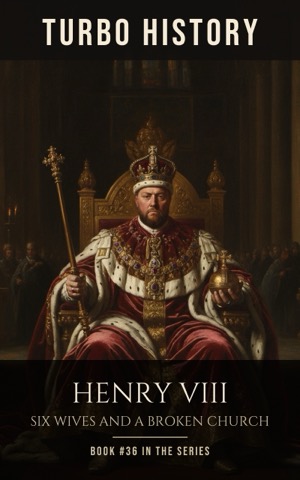
| Henry VIII: Six Wives and a Broken Church Turbo History · ours | ~6,600 words Under an hour | The whole reign in one sitting. How a spare son became a tyrant, and what he broke on the way |
| Henry VIII (Routledge Historical Biographies) Lucy Wooding, 2015 | ~374 pages About 11 hours | The best modern academic one-volume. Henry taken seriously as a religious thinker |
| Thomas Cromwell: A Life Diarmaid MacCulloch, 2018 | ~728 pages About 21 hours | The reign from the minister's desk. The best answer to who was actually running England |
| The Life and Death of Anne Boleyn Eric Ives, 2004 | ~458 pages About 13 hours | The best book on the second marriage. Forensic on how and why she was destroyed |
| The Tudor Revolution in Government: Administrative Changes in the Reign of Henry VIII G. R. Elton, 1953 | ~466 pages About 13 hours | The classic argument, in the original. Where the Cromwell case was first made |
| Henry VIII: The Quest for Fame John Guy, 2014 | ~140 pages About 4 hours | The fastest serious print introduction. A leading Tudor historian in one evening |
The picks, in detail
01
Henry VIII
Scarisbrick worked through the documentary record and produced the account that historians still treat as the benchmark, and later editions carry a foreword placing it against newer research. He puts Henry himself back at the centre of the reign, against the view that Cromwell was the real engine. It is political, diplomatic and religious history with very little social colour, and the prose assumes you are prepared to concentrate.
02
Henry VIII: The King and His Court
Weir organises the reign around the court, so you get the palaces, the money, the household, the hunting and the sheer performance of Tudor kingship alongside the politics. It is the easiest 639 pages on this list and it makes the period vivid in a way the academic books do not attempt. Weir is a popular historian and some of her reconstructions are more confident than the evidence strictly allows, so read her for the world and Scarisbrick for the verdicts.
03
Henry VIII: Six Wives and a Broken Church ours
Every book on this list goes deeper than ours, and most of them are hard work. That is not a criticism, it is the entire point of them. Scarisbrick gives you around 560 pages of documentary argument. MacCulloch's Cromwell runs to about 728 pages before you have even opened a life of Henry himself. They are good books, and they want weeks of your life.
If you are studying the Tudors properly, or sitting an exam on the Reformation, buy one of those and give it the time it deserves. We are not pretending to compete with them.
If you are not, ours might suit you better. It starts with Henry as the spare rather than the heir: the deaths that moved him up the line, the years kept close by a suspicious father, and the Renaissance education that produced a genuinely clever young king. Then the accession in April 1509 and the reign in four movements: rise, expansion, domination, and the final years. There is a chapter on what the rest of the world was doing at the same time, from the Islamic world and Ming China to India, Africa and the Americas. It ends on the wreckage: the permanent break with Rome, a succession that swung England from Edward to Mary to Elizabeth, the libraries and shrines destroyed in the dissolution, and a plain accounting of the executions, the Pilgrimage of Grace pardons that turned out to be lies, and the poverty left behind when the monasteries went.
That is what the whole series is for. Love history, but hate how it was taught at school? Same. School turned it into a memory test: names, dates, family trees, exam. The actual story never stood a chance. Turbo History is one figure or one event per book, told in under an hour. The rise, the fall, and why it still matters. Dates included, memorising optional. Sources at the back if you want to go further, and every book on this page is a good place to go next.
04
Henry VIII (Routledge Historical Biographies)
Wooding's Routledge biography is the most useful mid-length scholarly life, and it is unusually good on Henry's own religious convictions rather than treating the break with Rome purely as a divorce problem. It also comes with the historiography built in, so you can see where the arguments are. It is written for students, which shows in the structure, and it is drier than Weir.
05
Thomas Cromwell: A Life
MacCulloch spent decades on the Tudor Reformation and this is the definitive life of the man who did most of the work of the 1530s, built on the surviving Cromwell papers. Read it and the break with Rome, the dissolution of the monasteries and the fall of Anne Boleyn all look different. It is enormous at around 728 pages, and it assumes you already know the outline of Henry's reign before you start.
06
The Life and Death of Anne Boleyn
Ives spent a career on Anne Boleyn and this is the result: a careful reconstruction of who she was, what she believed, and how the case against her in 1536 was assembled out of very little. It is the single best corrective to the television version of the six wives. It is a life of Anne rather than of Henry, and the closing chapters get into evidential detail that some readers will find heavy.
07
The Tudor Revolution in Government: Administrative Changes in the Reign of Henry VIII
This is the book that claimed Cromwell created a modern bureaucratic state in the 1530s, and it set the terms of every argument about the reign for the next fifty years. If you want to know why historians talk about Henry's government the way they do, you have to meet the original case rather than summaries of it. It is dense administrative history, much of it has since been challenged, and it is the hardest read on this page.
08
Henry VIII: The Quest for Fame
Guy is one of the best Tudor historians working and this Penguin Monarchs volume is him compressing a career into a short, argued portrait of a king driven by the desire to be admired. It gives you the shape and the judgement without the apparatus. It is short by design, so the wives, the Reformation and the wars each get a few pages, and you will want a full biography afterwards.
Questions people actually ask
What is the best book about Henry VIII?
J. J. Scarisbrick's Henry VIII (1968) is still the standard scholarly life and the one other historians measure themselves against, at around 560 pages. If you want something more recent and academic but shorter, Lucy Wooding's Henry VIII is about 374 pages and handles the religion better. If you mainly want to enjoy the reading, Alison Weir's Henry VIII: The King and His Court is the most entertaining full-length option.
Where should I start with Henry VIII?
Start with John Guy's Henry VIII: The Quest for Fame if you want a short serious orientation, then move to Scarisbrick or Wooding for the full account. If you would rather begin with a long book you will actually finish, start with Alison Weir instead. Our own hour-long version gives you the whole arc tonight if you want the shape before committing to anything longer.
How much of the popular image of Henry VIII is accurate?
Less than most people assume. The version most of us carry around comes from Shakespeare, from historical novels including Hilary Mantel's Wolf Hall trilogy, and from television, and none of those are evidence even when they are well researched. The fat, roaring, wife-killing caricature flattens nearly forty years in which Henry was also an athlete, a scholar, a composer and a serious theologian. Scarisbrick and Wooding are the quickest routes back to the documented king.
Did Henry VIII really run his own government, or was it Thomas Cromwell?
Historians genuinely disagree, and this is the central argument of the field. G. R. Elton's The Tudor Revolution in Government (1953) argued that Cromwell built a new administrative state and effectively drove the 1530s. Scarisbrick pushed back and put Henry's own will at the centre. Diarmaid MacCulloch's Thomas Cromwell: A Life (2018) is the fullest modern treatment and gives Cromwell enormous credit without making Henry a passenger. Read MacCulloch and Scarisbrick together and you will see the shape of the disagreement.
What is the best book about Henry VIII's wives?
For one wife done properly, Eric Ives's The Life and Death of Anne Boleyn is the best book on this page and the strongest corrective to the television version of 1536. There is no single volume on all six that matches it for rigour, so treat books covering the whole set as introductions rather than authorities. Alison Weir's court biography also covers the marriages in the context of the household, which is a useful way to see them.
This book is free sometimes. Want to know when?
Henry VIII goes free on Amazon from time to time, along with the rest of the series. Leave your email and we will tell you the moment it does.
More from the series
One figure or one event per book. Under an hour each.