If you want one full biography, read Eric Ives's The Life and Death of Anne Boleyn, which has been the standard scholarly life for twenty years. If you want the newest research, read Hunting the Falcon by John Guy and Julia Fox. If you want the uncomfortable case that she might not have been innocent, read G. W. Bernard's Anne Boleyn: Fatal Attractions, then read Susan Bordo's The Creation of Anne Boleyn to see how much of the popular picture came out of novels and television. And if you have under an hour rather than a fortnight, ours covers the whole life in one sitting.
Every book listed here is real, in print or easily found, and worth the time. Reading times are honest estimates from page count at roughly 250 words per minute. Anne is harder to write about than almost any other Tudor figure, because the surviving sources are thin and most of them are hostile: ambassadors, rivals and propagandists who had reasons to lie. Historians reading the same documents reach opposite conclusions about whether she was framed. Popular fiction has done more to shape her public image than any historian has, so we say plainly which of these are serious scholarship and which are not.
The short version
Sorted by what you want, not by what is most famous.
| Book | Length | Best for |
|---|---|---|
| The Life and Death of Anne Boleyn Eric Ives, 2004 | ~458 pages About 13 hours | The standard scholarly life. The book the other Anne Boleyn books argue with |
| Hunting the Falcon: Henry VIII, Anne Boleyn and the Marriage That Shook Europe John Guy and Julia Fox, 2023 | ~624 pages About 18 hours | The newest research. Anne's French years finally given proper weight |
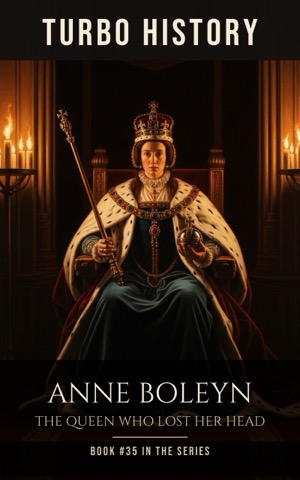
| Anne Boleyn: The Queen Who Lost Her Head Turbo History · ours | ~7,000 words Under an hour | The whole life in one sitting. How she got to the throne, how she lost her head, and what it broke |
| Anne Boleyn: Fatal Attractions G. W. Bernard, 2010 | ~237 pages About 7 hours | The minority case, argued properly. A serious historian willing to say she might have been guilty |
| The Rise and Fall of Anne Boleyn: Family Politics at the Court of Henry VIII Retha M. Warnicke, 1989 | ~326 pages About 9 hours | The academic account of the family politics. Anne as a Boleyn and a Howard first |
| The Lady in the Tower: The Fall of Anne Boleyn Alison Weir, 2009 | ~434 pages About 12 hours | The fall, almost day by day. The three weeks from arrest to scaffold |
| The Six Wives of Henry VIII Antonia Fraser, 1992 | ~479 pages About 14 hours | Anne in context. All six wives, so you can see what she was up against |
| The Creation of Anne Boleyn: A New Look at England's Most Notorious Queen Susan Bordo, 2013 | ~368 pages About 10 hours | The afterlife rather than the life. How propaganda, novels and television built the Anne we think we know |
| 1536: The Year that Changed Henry VIII Suzannah Lipscomb, 2009 | ~240 pages About 7 hours | The short one, from Henry's side. Why one year broke him |
The picks, in detail
01
The Life and Death of Anne Boleyn
Ives spent a career on the Tudor court and this is what it produced: the fullest reconstruction of Anne's rise, her religion and her destruction, arguing that she was innocent and brought down by a factional coup run by Cromwell. If you read one book on her, read this one. It is written for people who already know the period, so the political detail is dense and the names come at you fast.
02
Hunting the Falcon: Henry VIII, Anne Boleyn and the Marriage That Shook Europe
Guy and Fox went back into the continental archives and came out with genuinely new material, particularly on the seven years Anne spent in France and on the mechanics of the courtship. It is the most up to date serious account and it reads well for its size. At over 600 pages it is a commitment, and it is as much a book about Henry as about her.
03
Anne Boleyn: The Queen Who Lost Her Head ours
Every book on this list goes deeper than ours, and most of them are hard work. That is not a criticism, it is the entire point of them. Ives gives you 458 pages of Tudor faction politics and expects you to keep up. Guy and Fox give you 624 pages built on new archive work. They are good books, and they want weeks of your life.
If you are studying the Tudors, or sitting an exam on them, buy one of those and give it the time it deserves. We are not pretending to compete with them.
If you are not, ours might suit you better. It starts with a family climbing: a wool merchant's descendants who married into the Howards, and a daughter shipped off to the Netherlands and then to the French court, where she picked up the manners and the politics that made her stand out when she came home. Then her sister Mary's turn as the King's mistress and what Anne learned from watching it, the secret betrothal to Henry Percy that Wolsey killed off, the years of refusing Henry, and the break with Rome that the refusal forced. Then the secret weddings, the coronation, Elizabeth's birth, the miscarriages, Jane Seymour, Cromwell's move, the Tower, a trial with the verdict already decided, and a swordsman brought from France. It ends on what it changed: the Church of England that still exists because of it, the daughter who became Elizabeth I, and how Protestant writers turned an executed traitor into a martyr once that daughter was on the throne.
That is what the whole series is for. Love history, but hate how it was taught at school? Same. School turned it into a memory test: names, dates, family trees, exam. The actual story never stood a chance. Turbo History is one figure or one event per book, told in under an hour. The rise, the fall, and why it still matters. Dates included, memorising optional. Sources at the back if you want to go further, and every book on this page is a good place to go next.
04
Anne Boleyn: Fatal Attractions
Bernard reads the same thin evidence as everyone else and concludes that the adultery charges may not have been invented, which is a position most specialists reject. You should know that going in, and you should still read it, because it forces you to notice how little anyone actually knows. It is short and argumentative rather than a full life, so read Ives first or you will not see what Bernard is pushing against.
05
The Rise and Fall of Anne Boleyn: Family Politics at the Court of Henry VIII
Warnicke puts Anne inside her family's ambitions and the sexual politics of the court, and she is very good on how a woman's reputation worked as a weapon there. Her central theory, that Anne fell after a miscarriage that was read as evidence of witchcraft, has been rejected by most Tudor historians including Ives. Read it for the court politics and treat the thesis as one contested reading among several.
06
The Lady in the Tower: The Fall of Anne Boleyn
Weir narrows the focus to the spring of 1536 and takes it slowly: the arrests, the interrogations, the trials, the French swordsman. She is a popular historian rather than an academic, but she is heavily sourced here and the day by day structure makes the sheer speed of the collapse land properly. She writes with more certainty than the evidence always supports, so keep Ives and Bernard in view while you read it.
07
The Six Wives of Henry VIII
Fraser gives every wife a proper life rather than a chapter of gossip, which is the fastest way to understand why Catherine of Aragon could not be shifted and why Jane Seymour could. It is narrative history of the older school and it moves well. Anne gets only her share of the book, so this is context rather than a life of her.
08
The Creation of Anne Boleyn: A New Look at England's Most Notorious Queen
Bordo tracks the image from hostile Catholic writers of the 1530s through to modern historical fiction and prestige drama, and shows how much of what people believe about Anne was invented and by whom. It is sharp, and it will make you reread every other book on this page differently. It is cultural history rather than biography, so it assumes you already know the chronology and it argues hard in places.
09
1536: The Year that Changed Henry VIII
Lipscomb takes a single year and argues that it changed Henry permanently: the jousting accident, Catherine's death, Anne's execution, the rebellion in the north. It is the best short book here and it explains the man who signed the warrant. It is a book about Henry rather than about Anne, so use it to understand the decision rather than the woman.
Questions people actually ask
What is the best book about Anne Boleyn?
Eric Ives's The Life and Death of Anne Boleyn (2004) is the standard scholarly life and the book other historians argue with. It is about 458 pages and it assumes some familiarity with the Tudor court. If you want the most recent serious research instead, Hunting the Falcon by John Guy and Julia Fox (2023) is built on new archival work, especially about Anne's years in France.
Where should I start with Anne Boleyn?
If you know nothing about the period, start with Antonia Fraser's The Six Wives of Henry VIII for the context, then go to Ives for Anne herself. If you already know the outline, go straight to Ives or to Guy and Fox. Susan Bordo's The Creation of Anne Boleyn is the best follow-up, because it shows you where the version in your head actually came from.
Was Anne Boleyn guilty of the charges against her?
Most historians think not. The evidence was thin, one confession was probably extracted under duress, and the trial verdict looks predetermined. Eric Ives makes the detailed case that she was framed in a factional coup. G. W. Bernard is the serious dissenting voice and argues in Anne Boleyn: Fatal Attractions that guilt cannot be ruled out. The honest position is that the surviving sources are too thin and too partisan to close the question.
What is the best short book about Anne Boleyn?
G. W. Bernard's Anne Boleyn: Fatal Attractions is about 237 pages, though it is an argument rather than an introduction. Suzannah Lipscomb's 1536, at about 240 pages, is the better short read but it is about Henry VIII rather than Anne. Our own hour-long version covers her whole life if you want the shape of it tonight.
Are the novels and TV dramas about Anne Boleyn accurate?
Mostly not, and Susan Bordo's The Creation of Anne Boleyn is the book that explains why. She traces how hostile Tudor propaganda, Victorian moralising and modern fiction each rebuilt Anne to suit themselves. Read a serious biography first, then read Bordo, and you will be able to see which bits of the popular version were invented.
This book is free sometimes. Want to know when?
Anne Boleyn goes free on Amazon from time to time, along with the rest of the series. Leave your email and we will tell you the moment it does.
More from the series
One figure or one event per book. Under an hour each.