If you want one modern biography, read John Guy's My Heart Is My Own, published in the United States as Queen of Scots, which is the standard life and won the Whitbread. If you want the book that made her famous to general readers, Antonia Fraser's Mary Queen of Scots is still in print after more than fifty years. For the case against her, read Jenny Wormald's short and merciless Mary Queen of Scots: A Study in Failure. Jane Dunn's Elizabeth and Mary is the best book on the relationship that killed her. And if you have under an hour rather than a fortnight, ours covers the whole life in one sitting.
Every book listed here is real, in print or easily found, and worth the time. Reading times are honest estimates from page count. Two warnings before you buy. First, almost everything written about Mary is partisan: she is either an innocent woman destroyed by scheming men or a reckless conspirator who murdered her husband, and most authors have decided before chapter one. We have said which way each book leans. Second, the Casket Letters, the eight documents that supposedly prove she conspired with Bothwell to kill Darnley, disappeared after 1584 and survive only as copies and translations. They may be genuine, they may be forged, they may be genuine letters with forged passages inserted. Nobody can prove it either way, and any book that tells you the matter is closed is overstating its hand. The films, including the 2018 one, invent a face-to-face meeting between Mary and Elizabeth that never happened.
The short version
Sorted by what you want, not by what is most famous.
| Book | Length | Best for |
|---|---|---|
| My Heart Is My Own: The Life of Mary Queen of Scots John Guy, 2004 | ~574 pages About 16 hours | The standard modern life. Archive work on the manuscripts, including the Casket Letters |
| Mary Queen of Scots Antonia Fraser, 1969 | ~613 pages About 18 hours | The classic popular life. The book that put Mary back into the mainstream and still reads well |
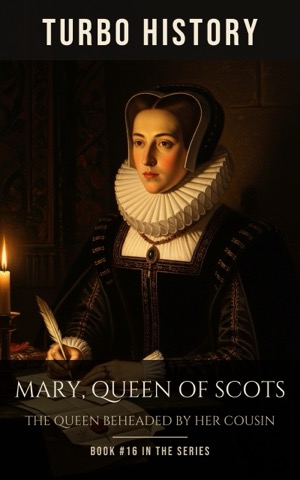
| Mary, Queen of Scots: The Queen Beheaded by Her Cousin Turbo History · ours | ~6,800 words Under an hour | The whole life in one sitting. Two crowns by sixteen, three husbands, nineteen years in prison and one axe |
| Mary, Queen of Scots and the Murder of Lord Darnley Alison Weir, 2003 | ~688 pages About 20 hours | One event in forensic detail. Kirk o'Field, hour by hour, and who was standing where |
| Elizabeth and Mary: Cousins, Rivals, Queens Jane Dunn, 2003 | ~453 pages About 13 hours | The relationship rather than the life. Two queens who never met and could not leave each other alone |
| Mary Queen of Scots (Routledge Historical Biographies) Retha M. Warnicke, 2006 | ~304 pages About 9 hours | The academic middle ground. Mary set in the context of what sixteenth-century queenship actually allowed |
| Mary Queen of Scots: A Study in Failure Jenny Wormald, 1988 | ~206 pages About 6 hours | The case against, made short. A Scottish historian arguing that Mary simply did not do the job |
The picks, in detail
01
My Heart Is My Own: The Life of Mary Queen of Scots
Guy went back to the original documents rather than the printed calendars, and his forensic chapters on the Casket Letters are the most careful treatment anyone has given them. It won the Whitbread biography prize and it is the book most historians now point people to first. It is sympathetic to Mary and argues hard for her, so read it knowing it is a case for the defence, and the manuscript detective work does slow the middle of the book down.
02
Mary Queen of Scots
Fraser writes narrative biography as well as anyone and this is the version most people have in their heads, sympathetic, novelistic and full of texture about clothes, castles and court life. It won the James Tait Black prize and has never been out of print. It is now over fifty years old, it predates most of the modern archival work, and Scottish historians have long complained that it treats Scotland as scenery for an English and French story.
03
Mary, Queen of Scots: The Queen Beheaded by Her Cousin ours
Every book on this list goes deeper than ours, and most of them are hard work. That is not a criticism, it is the entire point of them. John Guy gives you 574 pages built on the original manuscripts. Antonia Fraser gives you 613. They are good books, and they want weeks of your life.
If you are studying the Tudor or Stuart period, or sitting an exam on any of it, buy one of those and give it the time it deserves. We are not pretending to compete with them.
If you are not, ours might suit you better. It starts with a crown landing on a six-day-old baby, the regency fight that followed, an English king trying to force a wedding, and a childhood spent being moved around a war zone before she was shipped to France. Then the French education, two crowns by sixteen, widowed at eighteen, and the return to a Scotland that had turned Protestant while she was away. The middle covers the rise, the Darnley marriage, Rizzio, Kirk o'Field, Bothwell, the abdication and the flight into England. The last chapter is the one that matters: the Casket Letters and why the argument is still open, the precedent set by executing an anointed queen and how it echoed at Charles I's trial sixty-two years later, her son inheriting both thrones in 1603, and a blunt section on her own bad decisions that does not pretend she was only ever done to.
That is what the whole series is for. Love history, but hate how it was taught at school? Same. School turned it into a memory test: names, dates, family trees, exam. The actual story never stood a chance. Turbo History is one figure or one event per book, told in under an hour. The rise, the fall, and why it still matters. Dates included, memorising optional. Sources at the back if you want to go further, and every book on this page is a good place to go next.
04
Mary, Queen of Scots and the Murder of Lord Darnley
Weir narrows the whole life down to the murder and the year around it, laying out the depositions, the confessions and the physical evidence at length, which no general biography has room to do. If the Darnley killing is what brought you here, this is the book. She concludes Mary was not complicit, which is a defensible reading rather than a settled fact, and at nearly 700 pages on one crime it is a lot of detail to hold in your head.
05
Elizabeth and Mary: Cousins, Rivals, Queens
Dunn works mostly from the letters the two women exchanged over twenty five years and builds a genuinely acute double portrait of two very different approaches to being a female sovereign. It explains Elizabeth's nineteen years of hesitation better than any single-subject biography does. Because it is a dual study, Mary's Scottish reign gets less room than in Guy or Fraser, and you should have the basic chronology already.
06
Mary Queen of Scots (Routledge Historical Biographies)
Warnicke is a Tudor scholar and this is a textbook in the good sense: it lays out the historiography, weighs the evidence about the Casket Letters and the Bothwell marriage, and keeps asking what options a queen regnant in 1567 realistically had. It is the most even-handed book on this page. The prose is academic and the structure is thematic rather than dramatic, so it is less enjoyable to read than Fraser or Guy.
07
Mary Queen of Scots: A Study in Failure
Wormald knew sixteenth-century Scotland better than almost anyone and her argument is that Mary was not primarily a victim but a monarch who neglected the ordinary work of ruling and lost her kingdom because of it. It is bracing, brief and a necessary corrective to the sympathetic tradition. It is openly a polemic and it can be unfair, so read it against Guy rather than instead of him.
Questions people actually ask
What is the best book about Mary, Queen of Scots?
John Guy's My Heart Is My Own (2004), published in the United States as Queen of Scots: The True Life of Mary Stuart, is the standard modern biography. He worked from the original manuscripts, his treatment of the Casket Letters is the most thorough there is, and it won the Whitbread biography prize. Read Jenny Wormald's Mary Queen of Scots: A Study in Failure afterwards for the argument against, because Guy is firmly on Mary's side.
Were the Casket Letters real?
Nobody knows, and that is the honest answer. The eight letters and sonnets were produced by Mary's enemies in 1567 to prove she had conspired with Bothwell to murder Darnley. The originals vanished after 1584, probably destroyed, so we are left with copies of copies and translations of translations. John Guy argues that genuine letters were doctored with forged passages. Others think the whole thing was fabricated, and a minority think they were authentic. What is not in doubt is that they worked.
Where should I start with Mary, Queen of Scots?
Start with Antonia Fraser's Mary Queen of Scots if you want a story, or John Guy's My Heart Is My Own if you want the current scholarship. Fraser is easier going and the more enjoyable read; Guy is more reliable and better on the documents. If 600 pages is too much to commit to, Jenny Wormald's 206-page study or our own hour-long version will give you the shape of it first.
Is the film Mary Queen of Scots accurate?
No. The 2018 film and the 1971 one both stage a secret meeting between Mary and Elizabeth, and there is no evidence the two women ever met. The films also compress the chronology heavily and take large liberties with Darnley, Bothwell and Rizzio. Enjoy them as drama, then read Jane Dunn's Elizabeth and Mary for what the relationship actually was, which was conducted entirely by letter and by ambassador.
What is the best book about Darnley's murder?
Alison Weir's Mary, Queen of Scots and the Murder of Lord Darnley devotes nearly 700 pages to the Kirk o'Field explosion and the year around it, and no general biography comes close to that level of detail on the depositions and the physical evidence. She concludes Mary was not party to it. Read John Guy's chapters on the same events alongside it, since he reaches a similar conclusion by a different route, and Jenny Wormald for the sceptical view.
This book is free sometimes. Want to know when?
Mary, Queen of Scots goes free on Amazon from time to time, along with the rest of the series. Leave your email and we will tell you the moment it does.
More from the series
One figure or one event per book. Under an hour each.