If you want one full biography, read Anne Somerset's Elizabeth I, which is long but genuinely readable. If you want the political life written by a specialist, read Wallace MacCaffrey's Elizabeth I. If you want the case against the legend, read Christopher Haigh's Elizabeth I in the Profiles in Power series, which argues she was far more constrained and reactive than the Gloriana story allows. John Guy's Elizabeth: The Forgotten Years covers the difficult last twenty years most books rush, and her own Collected Works let you read her writing rather than other people's version of her. And if you have under an hour rather than a fortnight, ours covers the whole life in one sitting.
Every book listed here is real, in print or easily found in libraries, and worth the time. Reading times are honest estimates from page count at roughly 250 words per minute, so treat them as a guide rather than a promise. One thing worth knowing before you start: the Gloriana image was manufactured in Elizabeth's own lifetime, through portraits, progresses, poetry and a carefully managed cult of the Virgin Queen, and a lot of popular writing still repeats it as if it were simply what she was like. There is also a live scholarly disagreement about how much she actually decided. Christopher Haigh and others argue she was often pushed by her councillors and by events, while Wallace MacCaffrey and Susan Doran see a more deliberate operator working within real constraints. We say which side a book is on rather than pretending there is a settled answer.
The short version
Sorted by what you want, not by what is most famous.
| Book | Length | Best for |
|---|---|---|
| Elizabeth I Anne Somerset, 1991 | ~720 pages About 20 hours | The fullest readable life. Everything, in order, told properly |
| Elizabeth I Wallace MacCaffrey, 1993 | ~480 pages About 14 hours | The political life by the specialist. Elizabeth as a working politician rather than an icon |
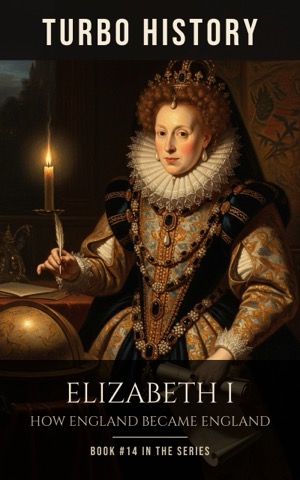
| Elizabeth I: How England Became England Turbo History · ours | ~6,300 words Under an hour | The whole life in one sitting. How an illegitimate princess who was not supposed to matter ended up ruling for 44 years |
| Elizabeth: The Forgotten Years John Guy, 2016 | ~490 pages About 14 hours | The last twenty years, which most books skip. The Armada aftermath, Ireland, Essex and the grinding end |
| Elizabeth I: Collected Works Edited by Leah S. Marcus, Janel Mueller and Mary Beth Rose, 2000 | ~446 pages About 13 hours | The primary source. Her speeches, letters, prayers and poems, gathered in one place |
| Queen Elizabeth I J. E. Neale, 1934 | ~402 pages About 11 hours | The classic that built the modern picture. Beautifully written, and now argued with constantly |
| Elizabeth I and Her Circle Susan Doran, 2015 | ~398 pages About 11 hours | The relationships that made the reign. Family, courtiers and councillors, one by one |
| Elizabeth I Christopher Haigh, 2000 | ~224 pages About 6 hours | The short revisionist case. The argument that Gloriana was mostly public relations |
| Gloriana: The Portraits of Queen Elizabeth I Roy Strong, 1987 | ~180 pages About 5 hours | The specialist angle. How the image was designed, controlled and repeated |
The picks, in detail
01
Elizabeth I
Somerset combines a scholar's sourcing with narrative that actually moves, which is rarer than it sounds at this length. She is very good on the texture of the court, the marriage negotiations and the personalities around the queen. The cost is obvious: 720 pages is a serious commitment, and readers who want an argument about Elizabeth rather than an account of her will find it long on story and short on thesis.
02
Elizabeth I
MacCaffrey spent decades on Elizabethan government and this is the distillation: her decisions, her constraints, her temperament and the limits of what a sixteenth-century monarch could actually do. It is the most useful single book on how the regime functioned. It is written for readers who already know the outline, it assumes familiarity with the councillors and factions, and it is the driest thing on this page.
03
Elizabeth I: How England Became England ours
Every book on this list goes deeper than ours, and most of them are hard work. That is not a criticism, it is the entire point of them. Somerset gives you 720 pages of full-dress biography. MacCaffrey gives you 480 pages on the politics alone. They are good books, and they want weeks of your life.
If you are studying this period, or sitting an exam on it, buy one of those instead. Somerset or MacCaffrey for the life, Haigh if you need the revisionist argument fast, Guy for the last twenty years. We are not pretending to compete with them.
If you are not, ours might suit you better. It starts with the unwanted princess whose mother was executed before she was three, the Thomas Seymour scandal in her teens, the Tower, and the years of waiting under her sister Mary when a wrong answer would have killed her. Then the reign: the religious settlement, the marriage question, Mary Queen of Scots, the Armada, and the difficult last decade. It ends on what she left behind: a compromise church that turned into global Anglicanism, the cult of the Virgin Queen and what it cost her, England's shift from broke and irrelevant to a naval power with an East India Company, and the price paid in Ireland and by English Catholics. There is a section called The Golden Age That Wasn't, because the last ten years were harvest failures, monopolies and discontent, and the legend was mostly assembled after she died.
That is what the whole series is for. Love history, but hate how it was taught at school? Same. School turned it into a memory test: names, dates, family trees, exam. The actual story never stood a chance. Turbo History is one figure or one event per book, told in under an hour. The rise, the fall, and why it still matters. Dates included, memorising optional. Sources at the back if you want to go further, and every book on this page is a good place to go next.
04
Elizabeth: The Forgotten Years
Guy deliberately starts in 1584 and covers the period after the famous victories, when the money ran out, the wars dragged, Ireland burned and the old queen fell out with a new generation. He uses manuscript sources to argue she was more hands-on late in life than the standard picture allows. Because it starts mid-reign it is a bad first book, and it is a case being made rather than a neutral survey, so read it after a full biography.
05
Elizabeth I: Collected Works
This is a primary source, and the best possible corrective to reading about Elizabeth secondhand: the Tilbury speech, the Golden Speech, the letters to Mary Queen of Scots and James, the private prayers. The editing is careful about which version of each text survives and how reliable it is, which matters more here than usual. It is a scholarly edition rather than a read-through book, and the sixteenth-century English takes real effort in places.
06
Queen Elizabeth I
Neale's biography defined Elizabeth for two generations of readers and it is still a pleasure to read, which is exactly why you should know it. Almost every later historian on this page is answering him in some way, particularly on Parliament and on how much the queen controlled. He is also strongly on the side of the legend, his parliamentary work has been substantially overturned, and his Elizabeth is more heroine than politician, so read him as a landmark rather than as current scholarship.
07
Elizabeth I and Her Circle
Doran builds the reign out of the people around Elizabeth, from her Boleyn relatives to Cecil, Dudley, Walsingham and Essex, which is a genuinely useful way of seeing how power actually moved. It also lands squarely in the argument about whether she or her councillors drove policy, and Doran's answer is more balanced than either extreme. The structure means the chronology jumps about, so you need to know the basic sequence of the reign before you start.
08
Elizabeth I
Haigh takes the reign apart theme by theme, government, religion, war, image, and argues that Elizabeth was frequently indecisive, obstructive and managed by her councillors, with the glorious version assembled afterwards. It is short, sharp and the most bracing thing on this list. It is deliberately one-sided, it is a book of argument rather than a life story, and it will annoy you if you have only ever read the admiring version, which is part of the point.
09
Gloriana: The Portraits of Queen Elizabeth I
Strong catalogues and explains the major portraits, showing how the eternally young, pearl-covered icon of the later years was constructed on purpose and policed by the regime. Seeing the image being built makes it much harder to mistake it for a description of a person. It is an art-historical book, heavy on attribution and workshop detail, and it will not tell you much about politics beyond the propaganda itself.
Questions people actually ask
What is the best book about Elizabeth I?
Anne Somerset's Elizabeth I (1991) is the best full-length life for most readers: about 720 pages, properly sourced, and written to be read rather than consulted. If you care more about how the government actually worked than about the court and the personalities, Wallace MacCaffrey's Elizabeth I (1993) is the better choice at around 480 pages. Read Christopher Haigh afterwards whichever you pick.
Where should I start with Elizabeth I?
Start with Somerset for the narrative, because you need the sequence of events before any of the arguments make sense. Then read Haigh's short Profiles in Power volume for the case that she was more reactive and more managed than the legend suggests. If the image itself is what interests you, Roy Strong's Gloriana shows you the portraits being designed.
Did Elizabeth I actually run the country, or did her councillors?
Historians genuinely disagree, and this is the main live argument in the field. Christopher Haigh argues she was often indecisive and pushed into decisions by Cecil, Walsingham and the council, with the triumphant version constructed later. Wallace MacCaffrey and Susan Doran present a more deliberate ruler working inside heavy constraints, and John Guy argues she was more personally in charge late in the reign than anyone had assumed. Reading Haigh and Guy together gives you the real shape of the disagreement.
How much of the Gloriana image was propaganda?
A great deal of it, and it was deliberate. The portraits of her later years show an ageless icon rather than a woman in her sixties, and the cult of the Virgin Queen was cultivated through progresses, poetry, accession day tilts and tight control of her image. Roy Strong's Gloriana documents how that was managed, and Haigh explains why the regime needed it. None of that means she was ineffective, only that the glow around her was designed.
What is the best short book about Elizabeth I?
Christopher Haigh's Elizabeth I is about 224 pages and is the most rewarding short book, though it is an argument rather than a straight biography. Roy Strong's Gloriana is about 180 pages if you want the image rather than the reign. Our own hour-long version covers the whole life if you want the shape of it tonight.
This book is free sometimes. Want to know when?
Elizabeth I goes free on Amazon from time to time, along with the rest of the series. Leave your email and we will tell you the moment it does.
More from the series
One figure or one event per book. Under an hour each.