Eight men.One office, eight ways to hold it.

Eight men, one office, and a job that changes shape under every one of them. Read in order and you watch the presidency grow from an experiment into the most powerful post on earth.

8 books  ·  about 8 hours end to end  ·  £2.99 / $2.99 each  ·  free with Kindle Unlimited

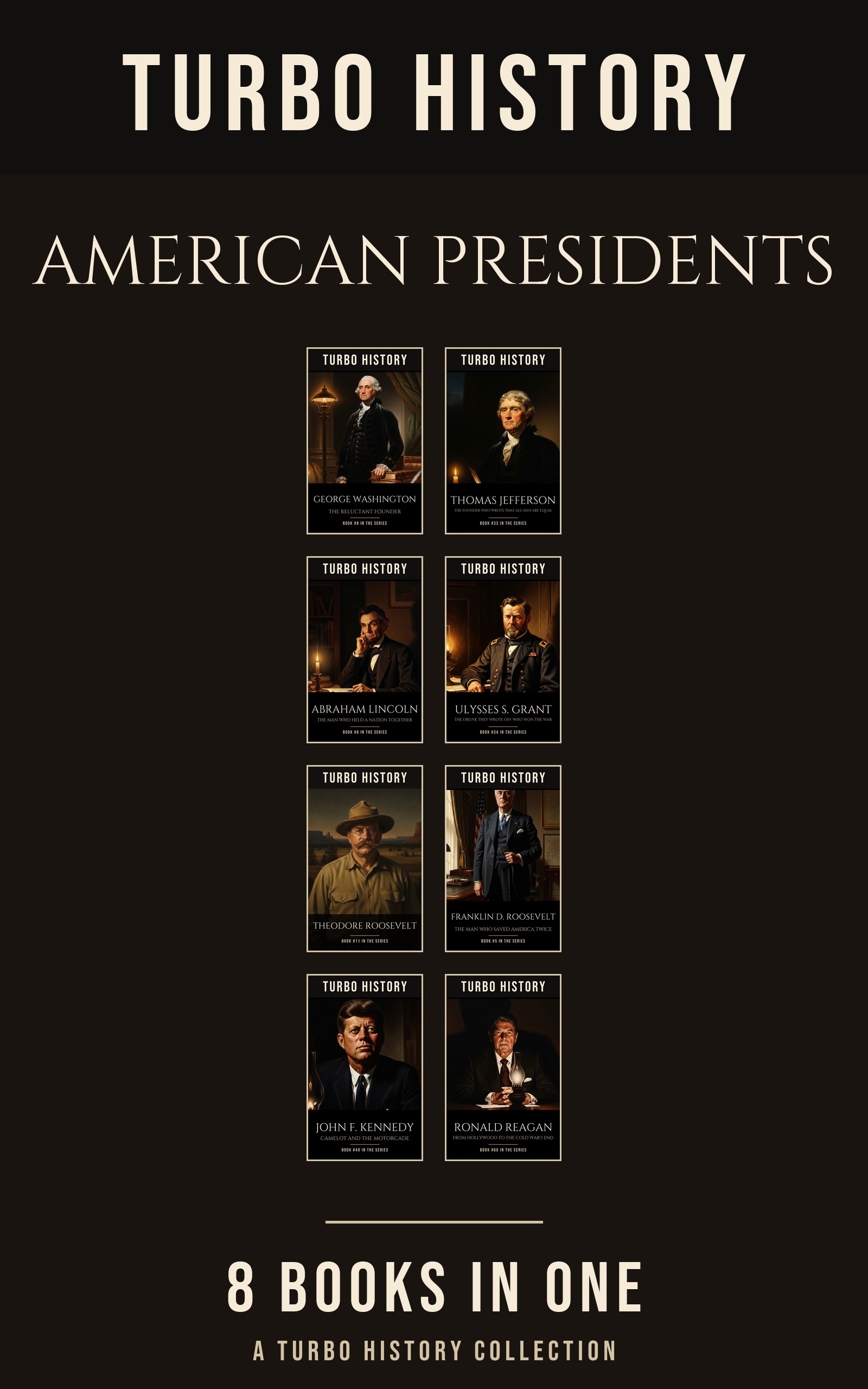
George Washington book coverThomas Jefferson book coverAbraham Lincoln book coverUlysses S. Grant book coverTheodore Roosevelt book coverFranklin D. Roosevelt book coverJohn F. Kennedy book coverRonald Reagan book cover

The American presidency was designed to be weak. The men who drafted it had just fought a war against a king and had no intention of building a second one. What these eight books show, taken end to end, is how it stopped being weak. Washington sets the limit by walking away after two terms. Lincoln discovers the office can suspend habeas corpus and turn a war into emancipation for four million people. Franklin Roosevelt wins four elections and rebuilds the state around the job. By Kennedy, one man in one room has minutes rather than months to decide how a crisis ends. By Reagan the job is largely televised, and being good on camera is most of it.

So the order is chronological, because the accumulation is the whole point. Each book stands on its own and assumes nothing, but together they make a single argument about power collecting in one office and never dispersing again. Two of these eight were shot dead in post and a third was shot and back at his desk within a fortnight. One was a general who had been written off as a drunk. One could not walk and kept the extent of it out of sight for twelve years.

Eight books, an hour each, so a long working day in total for two hundred years of the office. These are lives rather than policy histories, and no attempt is made at a balanced verdict on any of them. Every book ends with a short list of the fuller biographies if one of the eight grabs you.

The reading path

8 books, in the order that makes each one hit harder than it would alone.

01

George Washington book cover

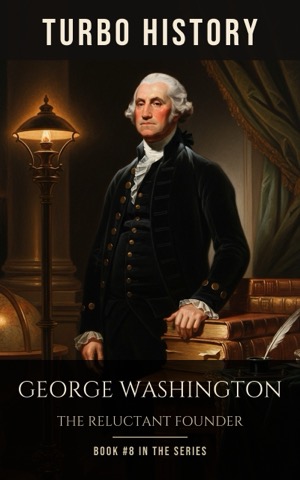
George Washington

First, because he had no model to copy and everything he did became one. He won a war in which he lost most of the battles, then did the unexpected thing twice: handed his commission back to Congress in 1783, and walked out of the presidency in 1797 after two terms. No law required either. The second decision held for the next century and a half on nothing but his example.

Read the book
02

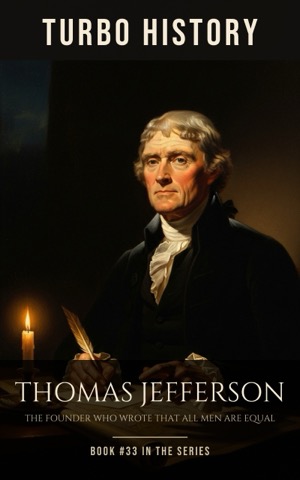
Thomas Jefferson: The Founder Who Wrote That All Men Are Equal book cover

Thomas Jefferson - The Founder Who Wrote That All Men Are Equal

Second, because the contradiction at the centre of the country is easiest to see inside one man. He wrote that all men are created equal, and he enslaved more than six hundred people over the course of his life. He also doubled the size of the United States in 1803 for about fifteen million dollars, using a presidential power he had spent his whole career insisting did not exist.

Read the book

03

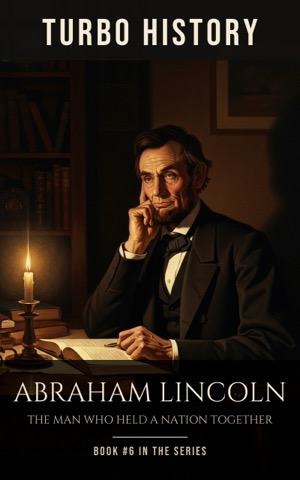
Abraham Lincoln book cover

Abraham Lincoln

Third, because the union the first two built comes apart here, and the office swells to hold it together. A one-term congressman with roughly a year of formal schooling in total, elected in 1860 without carrying a single southern state, and by 1865 slavery is finished and the presidency has taken wartime powers it never entirely handed back. He was shot five days after the surrender at Appomattox.

Read the book

04

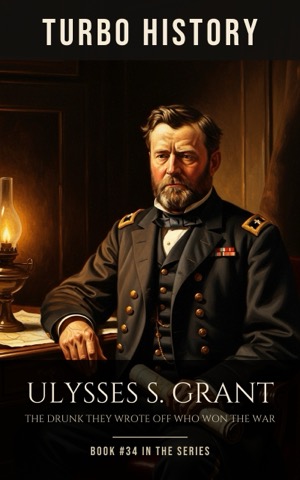
Ulysses S. Grant: The Drunk They Wrote Off Who Won the War book cover

Ulysses S. Grant - The Drunk They Wrote Off Who Won the War

Fourth, because Lincoln's war needed somebody to actually win it and nobody expected it to be this man. He had failed at farming, at business and, by reputation, at staying sober, and was selling firewood on a street corner before the war. Then Vicksburg, Appomattox, two terms in the White House and eight years spent trying to defend Black voters in the South. He finished his memoirs days before throat cancer killed him, to clear his family's debts.

Read the book

05

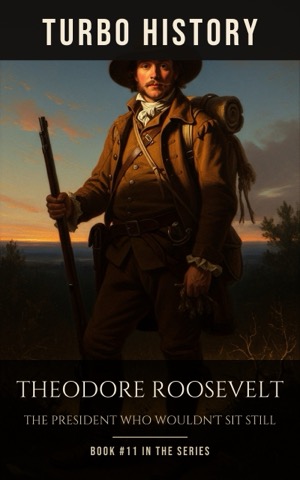
Theodore Roosevelt: The President Who Wouldn't Sit Still book cover

Theodore Roosevelt - The President Who Wouldn't Sit Still

Fifth, because he is the first president to treat the job as a stage rather than an administration. The youngest ever at forty-two, put there by an assassin's bullet rather than a vote. He broke up trusts, took the ground for the Panama Canal, placed something like two hundred and thirty million acres under federal protection, and won the Nobel Peace Prize in 1906 for ending somebody else's war between Russia and Japan.

Read the book

06

Franklin D. Roosevelt book cover

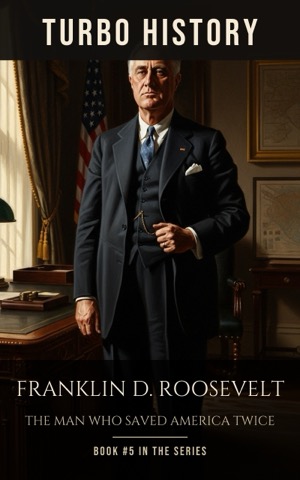
Franklin D. Roosevelt

Sixth, because the office finally becomes the centre of American daily life and never leaves. Elected four times, twelve years in post, and a state rebuilt around banking rules, public works and old-age pensions that are still there. He had been paralysed from the waist down since 1921 and was almost never photographed in the chair. He died in April 1945, weeks before the German surrender he had spent his last term arranging.

Read the book

07

John F. Kennedy: Camelot and the Motorcade book cover

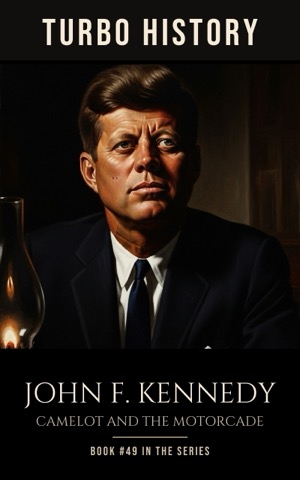
John F. Kennedy - Camelot and the Motorcade

Seventh, because this is the presidency at maximum power with the smallest margin for error anyone had yet faced. Just over a thousand days in office, a botched invasion of Cuba in his first months, then thirteen days in October 1962 spent overruling most of the senior advisers pressing him for air strikes. Thirteen months after that, an open car in Dallas, and the office he had made glamorous became something the country watched being taken apart.

Read the book

08

Ronald Reagan: From Hollywood to the Cold War's End book cover

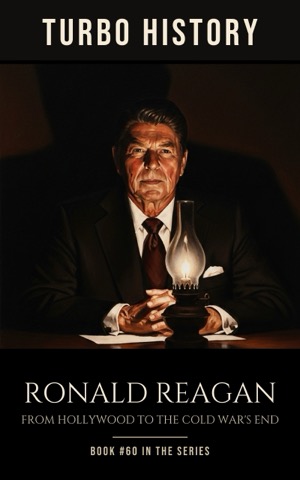
Ronald Reagan - From Hollywood to the Cold War's End

Last, because the job has now become mostly performance, and he is the first president who had trained for that part. A film actor and screen actors' union president who changed parties in middle age, governor of California, and sworn in at sixty-nine, the oldest to that point. Shot in the chest in March 1981 and back at work inside a fortnight. Then tax cuts, a national debt close to tripled, and an arms treaty signed in 1987 with the leader of a country he had called an evil empire four years earlier. He announced his own Alzheimer's in a handwritten letter in 1994 and was not seen in public again.

Read the book
End of the path

From a president who argued his way out of a royal-sounding title to one who had spent his first career in front of a camera and treated the office as the bigger role. For the wars underneath half of this path, the Wars and Events books cover the ground these men stood on.

The American Presidents Collection: 8 Books in One cover

The whole path, one book

The American Presidents Collection: 8 Books in One

Every book on this page in a single Kindle edition - 8 complete histories, one download, free with Kindle Unlimited or $6.99 to keep.

Get the Collection on Amazon
Fair warning

These are not academic books. You will not find footnotes to chase, family trees to memorise, or ten pages on the logistics of a treaty. Every book ends with a page of proper ones to go to next if you want that depth. If you want the story and the big picture in an hour, you are home.

American Presidents books go free most weekends.

Most weekends one Turbo History book goes completely free on Amazon, and often it is one of these. Leave your email and we will tell you which one, before it goes back to full price.

If you liked American Presidents

Same series, same hour, next to the ones you have just read.